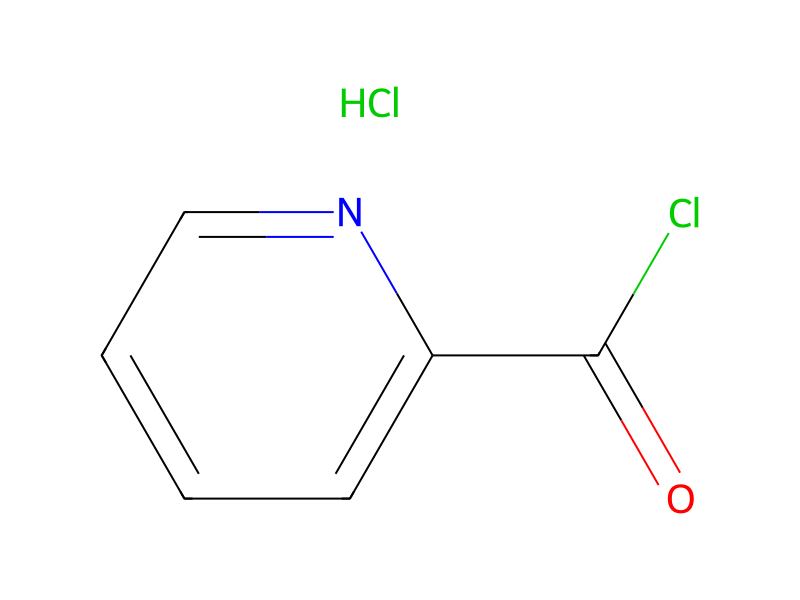
[C:1]1([CH2:7][CH2:8][C:9]2[N:19]3[C:20]4[C:15]([CH:16]([NH2:21])[CH2:17][CH2:18]3)=[CH:14][CH:13]=[CH:12][C:11]=4[N:10]=2)[CH:6]=[CH:5][CH:4]=[CH:3][CH:2]=1.N1C=CC=CC=1.Cl.[N:29]1[CH:34]=[CH:33][CH:32]=[CH:31][C:30]=1[C:35](Cl)=[O:36].O>ClCCl>[C:1]1([CH2:7][CH2:8][C:9]2[N:19]3[C:20]4[C:15]([CH:16]([NH:21][C:35]([C:30]5[CH:31]=[CH:32][CH:33]=[CH:34][N:29]=5)=[O:36])[CH2:17][CH2:18]3)=[CH:14][CH:13]=[CH:12][C:11]=4[N:10]=2)[CH:6]=[CH:5][CH:4]=[CH:3][CH:2]=1A portion (0.4 g) of the 5,6-dihydro-2-(2-phenylethyl)-4H-imidazo[4,5,1-ij]quinolin-6-amine obtained in Step 2 of Example 17 was dissolved in anhydrous dichloromethane (5 mL); following the addition of pyridine (0.26 mL), picolinoyl chloride hydrochloride (0.28 g) was added under cooling with ice. After stirring for 4 hrs at room temperature, water (50 mL) and dichloromethane (50 mL) were added to the reaction solution and then two layers were separated, and the aqueous layer was extracted with dichloromethane. The organic layers were combined, washed with saturated brine and dried over anhydrous sodium sulfate. The solvent was removed under reduced pressure and the residue was purified by silica gel column chromatography (eluent: ethyl acetate) to yield the titled compound as pale brown crystals (0.31 g).