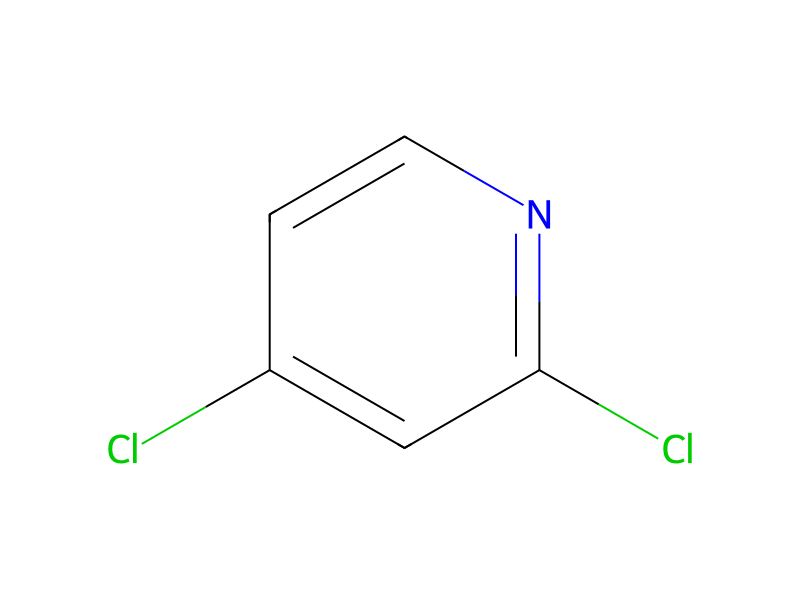
Objective: Poisoning experiment to find out if 2-aminooxazole or the coupled product from reaction of 2-aminooxazole and 2,4-dichloropyridine are 'poisoning' the catalyst. Reaction (a): Control reaction under identical conditions to EN04881-40 (should produce similar yield) Reaction (b): As for control but spiked with 2 eq. of 2-aminooxazole with respect to catalyst, before dioxane was added (will produce decreased yield if 2-aminooxazole is a poison) Reaction (c): As for control but spiked with 1 eq. of N-(4-chloropyridin-2-yl)oxazol-2-amine, before dioxane was added (will produce decreased yield if N-(4-chloropyridin-2-yl)oxazol-2-amine is a poison) Pd2(dba)3 (22.89 mg, 0.025 mmol), 9,9-dimethyl-4,5-bis(diphenylphosphino)xanthene (43.4 mg, 0.075 mmol), 2,4-dichloropyridine (148 mg, 1.00 mmol), cesium carbonate (651 mg, 2.00 mmol),ethyl 2-aminooxazole-5-carboxylate (156 mg, 1.00 mmol) and 4,4'-di-tert- butylbiphenyl (26.6 mg, 0.10 mmol) were added to an oven dried microwave vial, the vial was capped and placed under an inert atmosphere. Dioxane (4 mL) was added and the resulting mixture was heated to 140 °C for 1 h by microwave irradiation under a nitrogen atmosphere. An isolated yield was obtained for reaction (a). Dichloromethane (10 mL) was added to the crude reaction mixture and the mixture was adsorbed onto silica. The crude product was purified by flash silica chromatography, elution gradient 0 to 20% EtOAc in heptane. Pure fractions were evaporated to dryness to afford ethyl 2-(4-chloropyridin-2-ylamino)oxazole-5-carboxylate (111 mg, 41.5 %) as a white solid. Taking into account that the crude LCMS for reaction (A) corresponds to a ~ 42% isolated yield, the amount of product can be calculated for reactions (B) and (C) using the ratio between the t-Butyl biphenyl and the required product in the LCMS. The amount of required product produced in reaction (B) was 41% and for reaction (C) 45% product was produced. Conclusion: The above compounds do not poison the catalyst. Note: Significant amounts of what is assumed to be the regioisomeric 4-aminated product were also formed in these reactions. Major regioisomer formed in ~ 4:1 ratio.