반응식

Cl[C:2]1[C:11]2[C:6](=[CH:7][CH:8]=[CH:9][CH:10]=2)[N:5]=[CH:4][N:3]=1.[C:12]1([CH2:18][CH2:19][CH:20]2[C:25](=[O:26])[NH:24][C:23](=[O:27])[NH:22][C:21]2=[O:28])[CH:17]=[CH:16][CH:15]=[CH:14][CH:13]=1>>[C:12]1([CH2:18][CH2:19][C:20]2([C:2]3[C:11]4[C:6](=[CH:7][CH:8]=[CH:9][CH:10]=4)[N:5]=[CH:4][N:3]=3)[C:25](=[O:26])[NH:24][C:23](=[O:27])[NH:22][C:21]2=[O:28])[CH:17]=[CH:16][CH:15]=[CH:14][CH:13]=1참가 물질
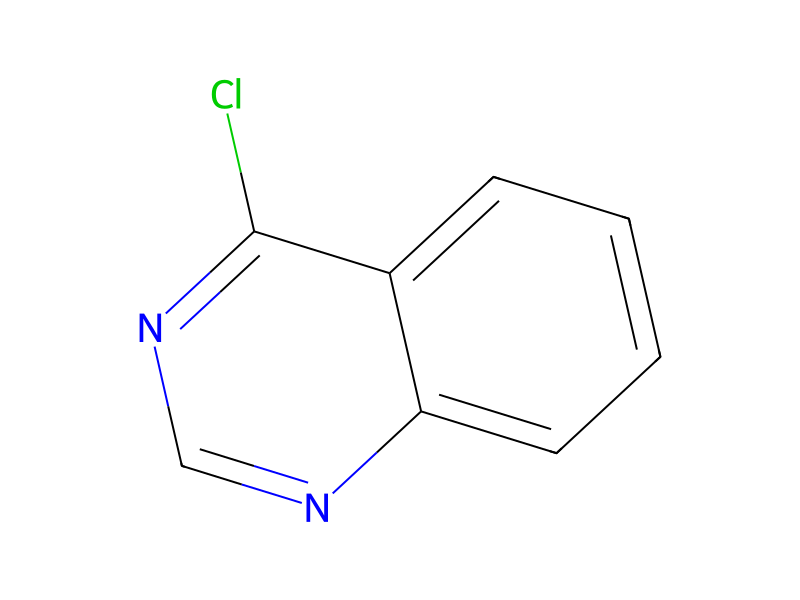


반응 조건
- 온도
- 170 °C
실험 절차
A mixture of 3.3 g of 4-chloroquinazoline and 4.65 g of 5-(2-phenylethyl) barbituric acid was heated to 170° C. for two and one-half hours, then cooled to form the 5-(2-phenylethyl)-5-(4-quinazolyl) barbituric acid. This compound was hydrolyzed, without isolation, by adding 40 ml of water and 4.5 g of NaOH to the mixture, heating to reflux for four hours. The mixture was cooled, acidified with HCl, refluxed two additional hours, then cooled, and neutralized. Product was extracted into CH2Cl2, which was then separated, dried, and evaporated. The residue was absorbed onto silica gel and eluted with 10% EtOAc/CH2Cl2 →20% EtOAc/CH2Cl2. Fractions containing product were combined. TLC showed impurities present. The product was rechromatographed using 15% EtOAc/CH2Cl2, however, impurities remained. Solvent was evaporated and the residue was redissolved in pentane. The product dissolved in pentane leaving impurities as a gummy residue. The pentane solution was decanted, filtered, and evaporated to give 0.75 g of the title product as a light oil.
후처리
- temperaturecooled
출처 및 근거
- ORD 기록
- ord-21a947e6faac44ebb55a92f9b1dcc4f3
- 출처 데이터셋
- uspto-grants-1995_05
- 특허 번호
- US05411963
연결된 노트
불러오는 중…