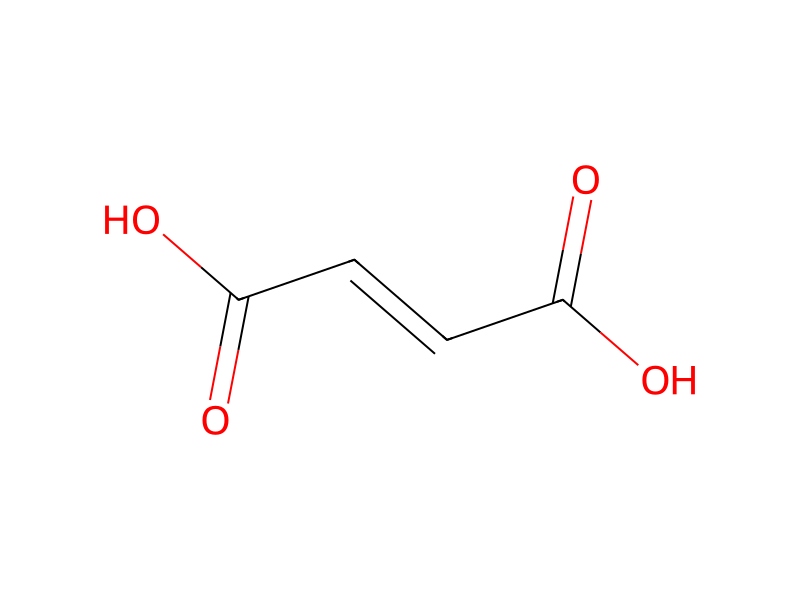
Fumaric Acid → 2-Amino-8-hydroxymethyl-8-chloro-1,2,3,4-tetrahydronaphthalene fumarate
반응식

[NH2:1][C:2]1(CO)[CH2:11][CH2:10][C:9]2[C:4](=[C:5]([Cl:12])[CH:6]=[CH:7][CH:8]=2)[CH2:3]1.[C:15]([C@:23]([C:38]([OH:40])=[O:39])(O)[C@:24](C(=O)C1C=CC=CC=1)(O)[C:25]([OH:27])=[O:26])(=[O:22])C1C=CC=CC=1.C(O)(=O)/C=C/C(O)=O>C(O)C>[C:38]([OH:40])(=[O:39])/[CH:23]=[CH:24]/[C:25]([OH:27])=[O:26].[NH2:1][CH:2]1[CH2:11][CH2:10][C:9]2[CH:8]=[CH:7][CH2:6][C:5]([CH2:15][OH:22])([Cl:12])[C:4]=2[CH2:3]1참가 물질
5



실험 절차
The expected product is obtained by resolving the compound obtained in stage D of Example 9 using (+)-dibenzoyl-D-tartaric acid by successive recrystallizations in ethanol. The enantiomeric purity is checked by chiral chromatography on a DIACEL-AD column, using an isopropanol/n-heptane/diethylamine mixture (40/1000/0.8) as eluent. The salt is then partitioned between 9N sodium hydroxide and dichloromethane. The aqueous phase is extracted with dichloromethane. After drying and evaporating the organic phases, the residue is dissolved in ethanol with one equivalent of fumaric acid and the mixture is brought to reflux. The expected product is then obtained after cooling, in the form of a white solid which is filtered off.
후처리
- customby successive recrystallizations in ethanol
- customThe salt is then partitioned between 9N sodium hydroxide and dichloromethane
- extractionThe aqueous phase is extracted with dichloromethane
- customAfter drying
- customevaporating the organic phases
- temperatureto reflux
출처 및 근거
- ORD 기록
- ord-4dddc8347f1c4b08b74f867ac8c2bf7e
- 출처 데이터셋
- uspto-grants-1996_01
- 특허 번호
- US05486532
반응 노트
불러오는 중…