반응식
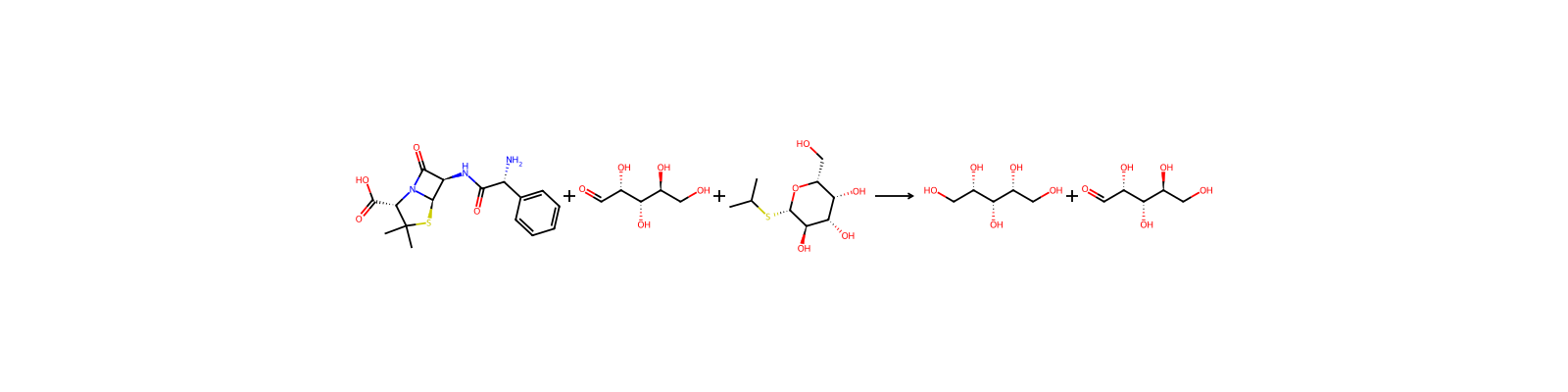
CC1(C)S[C@@H]2[C@H](NC([C@H](N)C3C=CC=CC=3)=O)C(=O)N2[C@H]1C(O)=O.[O:25]=[CH:26][C@@H:27]([C@H:29]([C@H:31]([CH2:33][OH:34])[OH:32])[OH:30])[OH:28].CC(S[C@@H]1[O:44][C@H:43]([CH2:45][OH:46])[C@H:42]([OH:47])[C@H:41]([OH:48])[C@H:40]1[OH:49])C>>[CH2:26]([OH:25])[C@@H:27]([C@H:29]([C@@H:31]([CH2:33][OH:34])[OH:32])[OH:30])[OH:28].[O:46]=[CH:45][C@@H:43]([C@H:42]([C@H:41]([CH2:40][OH:49])[OH:48])[OH:47])[OH:44]참가 물질


실험 절차
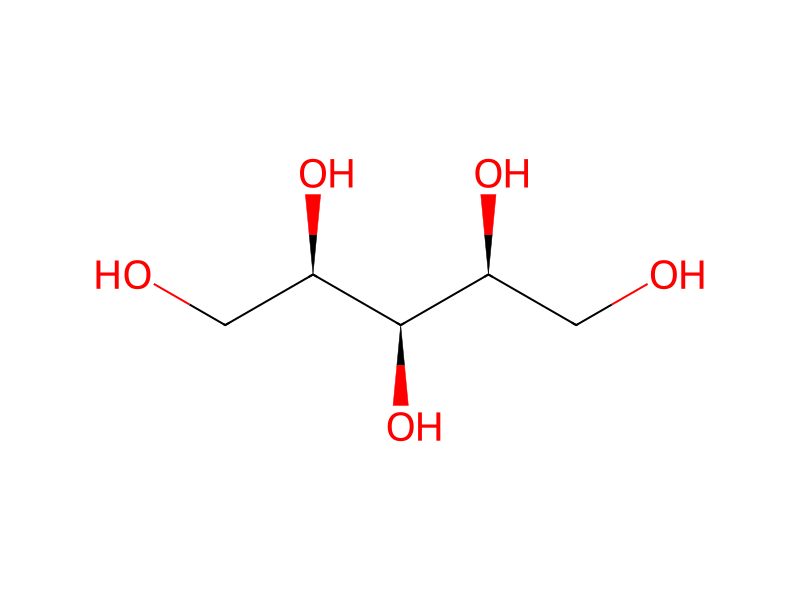
To test the activity of the XR/Lad1/Alx1 operon, plasmid pATX112 was inserted into strain ZUC99 by electroporation (ZUC99/pATX112). The strain was inoculated from a single colony into 3 mL LB media supplemented with ampicillin (200 mg/L) and incubated overnight at 30° C. with shaking (250 RPM). After incubation, an aliquot of the culture was diluted 100-fold into 20 mL of fresh LB media contain L-arabinose (1% w/v) and ampicillin (200 mg/L) and incubated (30° C., 250 RPM) for 2 hrs. The culture was induced with isopropyl-β-D-thiogalactopyranoside (IPTG, 1 mM). The culture was incubated at 30° C. with shaking (250 RPM) and aliquots were removed at various time points after the IPTG induction. The samples were monitored for xylitol formation from L-arabinose by HPLC analysis using an Aminex HPX-87P column (BioRad, USA). After 24 hrs post induction, the XR/Lad1/Alx1 operon strain (ZUC99/pATX112) displayed a 2% conversion of L-arabinose to xylitol, showing that the recombinant bacterium acquires the ability to produce xylitol from L-arabinose (Table 6).
후처리
- additionAfter incubation, an aliquot of the culture was diluted 100-fold into 20 mL of fresh LB media
- custom(30° C., 250 RPM)
- customfor 2 hrs
- customwas incubated at 30° C.
- stirringwith shaking (250 RPM) and aliquots
- customwere removed at various time points after the IPTG induction
출처 및 근거
- ORD 기록
- ord-7983ec4dee9d4fc5808a36db902eeb1a
- 출처 데이터셋
- uspto-grants-2013_02
- 특허 번호
- US08367346B2
연결된 노트
불러오는 중…