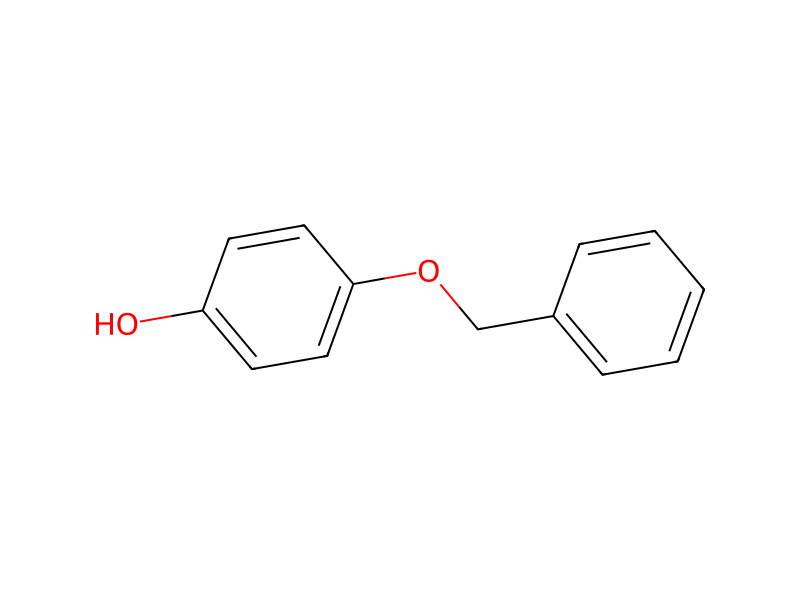
In 25 mL of dimethylformamide was dissolved 2.5 g of 3,6-dichloro-2-pyrazinecarbonitrile. After adding 3.2 g of 4-(benzyloxy)phenol and 3.0 g of potassium carbonate, the mixture was stirred at room temperature for one hour. A mixture of 25 ml of ethyl acetate and 100 mL of water was added to the reaction mixture, and the organic layer was separated. The organic layer thus obtained was washed successively with water and saturated aqueous solution of sodium chloride and dried on anhydrous magnesium sulfate, and the solvent was removed under reduced pressure. Diisopropyl ether was added to the residue, the insoluble matter was filtered off, and the filtrate was concentrated. The residue thus obtained was washed with n-hexane to obtain 3.84 g of 3-[(4-(benzyloxy)phenoxy)]-6-chloro-2-pyrazinecarbonitrile as a light brown-colored solid product.