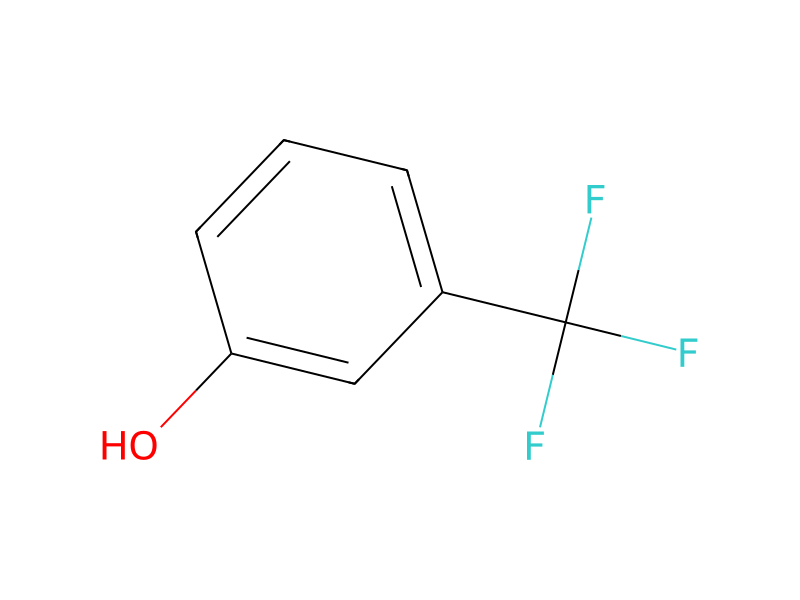
3,3-Dichloroacrolein (10 mmoles) diluted with dimethoxyethane (35 ml), is slowly added to a mixture consisting of a cyclopropylcarbamidine hydrochloride (10 mmoles), 3-trifluoromethylphenol (11 mmoles), potassium carbonate (40 rnmoles) and dimethyoxyethane (40 ml), which is stirred under reflux. When the addition of 3,3-dichloroacrolein is completed additional cyclopropylcarbamidine hydrochloride (1 mmoles) is added. The reaction mixture is stirred for 3 hours under reflux and subsequently cooled down to ambient temperature over night and filtered through silica. The organic phase is concentrated in vacuo. The residue was purified by chromatography on Al2O3 (petrol ethers/ethyl acetate: 20/1) to yield 2.1 g (75%) of the pure product having as a colorless liquid; 1H NMR (CDC13); δ=2.10 ppm (m, N═C(═N)═CH).