반응식

[S:1]1[C:5]([C:6]([O-:8])=[O:7])=[CH:4][CH:3]=[C:2]1[C:9]([O-:11])=[O:10].[Na+].[Na+].C(=O)=O.[H][H].[S]>O.[N+]([O-])([O-])=O.[Ag+].[Ag]>[S:1]1[C:5]([C:6]([OH:8])=[O:7])=[CH:4][CH:3]=[C:2]1[C:9]([OH:11])=[O:10]참가 물질





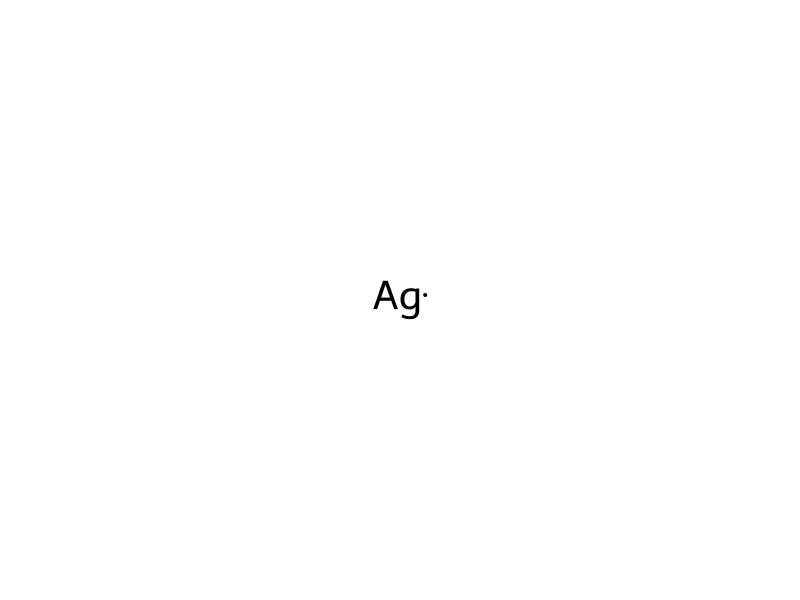


반응 조건
- 온도
- 350 °C
실험 절차
The di-silver of thiophene-2.5-dicarboxylic acid was prepared in 96 mole % yield by reacting 34.4 grams, 0.2 moles, of disodium thiophene-2,5-dicarboxylate in 500 milliliters of water with 0.4 moles of silver nitrate in 500 milliliters of water, collecting the precipitated silver salt on a filter, followed by washing and drying of the salt. The di-silver salt, 7.75 grams, and 0.02 moles, which decomposes at 315° C, was placed as a thin layer of powdered silver salt along the length of a Vycor reactor tube and heated in a furnace under nitrogen at 350° C for two minutes. Carbon dioxide (CO2) evolved with a sudden puffing up. Combustion of the silver salt subsided with the formation of the polymer and with cessation of evolution of CO2. Heating was stopped and the nitrogen purge was maintained while the tube and contents cooled to room temperature. The calculated loss of CO2 for 0.04 moles CO2 was 1.76 grams. Actual weight loss was 1.95 grams. The resulting carbon-like polymer containing silver analyzed: carbon 15.4%, hydrogen 0.6%, sulfur 4.4%, and silver 79.7%.
후처리
- customyield
- washby washing
- customdrying of the salt
- customdecomposes at 315° C
- temperatureHeating
- customthe nitrogen purge
- temperaturewas maintained while the tube and contents
- temperaturecooled to room temperature
출처 및 근거
- ORD 기록
- ord-625707e710834491b773f5e8ac21cf1b
- 출처 데이터셋
- uspto-grants-1977_12
- 특허 번호
- US04065442
연결된 노트
불러오는 중…