4-Bromo-2-fluoroanisole → 3,3'-Difluoro-4,4'-dimethoxy-1,1'-biphenyl
반응식

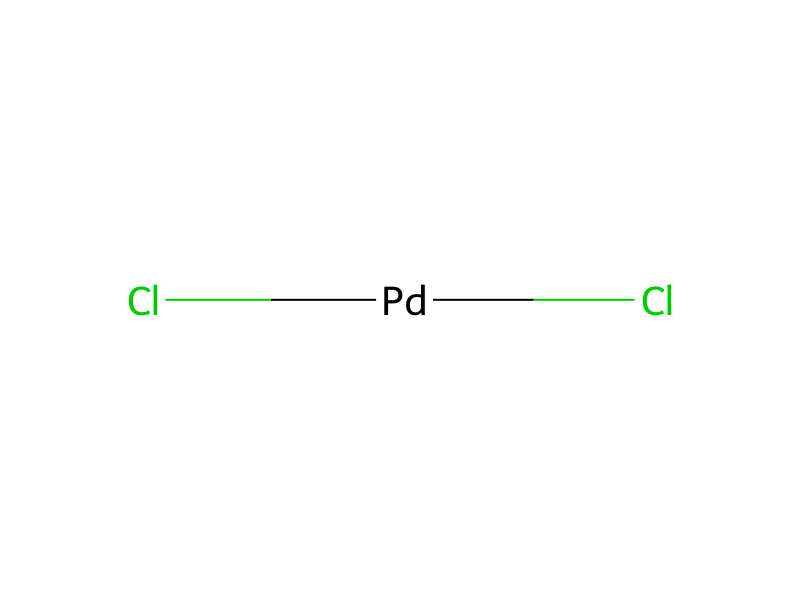
[F:1][C:2]1[CH:7]=[C:6](Br)[CH:5]=[CH:4][C:3]=1[O:9][CH3:10]>[Pd](Cl)Cl>[F:1][C:2]1[CH:7]=[C:6]([C:6]2[CH:5]=[CH:4][C:3]([O:9][CH3:10])=[C:2]([F:1])[CH:7]=2)[CH:5]=[CH:4][C:3]=1[O:9][CH3:10]참가 물질
3


실험 절차
The procedure for synthesis is briefly explained below. First, 2-fluoroanisole [1] is reacted with bromine to give 2-fluoro-4-bromoanisole [2], which is subsequently reacted with magnesium to give a compound [3] of Grignard reagent type. This compound is condensed with 2-fluoro-4-bromoanisole [2] in the presence of a palladium chloride catalyst to give 3,3'-difluoro-4,4'-dimethoxybiphenyl [4]. In this way, the biphenyl skeleton is formed. Then, the both terminals of 3,3'-difluoro- 4,4,-dimethoxybiphenyl [4] are demethylated by boron tribromide to give 3,3'-difluoro-4,4'-dimethoxybiphenyl [4]. One of the two hydroxyl groups in the compound [5] is blocked by acylation with acetic acid chloride to give a compound [6]. The remaining hydroxyl group in the compound [6] is alkylated with a halogenated alkyl having a specific chain length (p=6 to 15) to give a compound [7]. Finally, the compound [7] undergoes hydrolysis by an alkali catalyst (sodium hydroxide) to remove the acyl group. Thus there is obtained an unblocked compound [8], which is ready for coupling with a cyclohexane ring through an ester linkage.