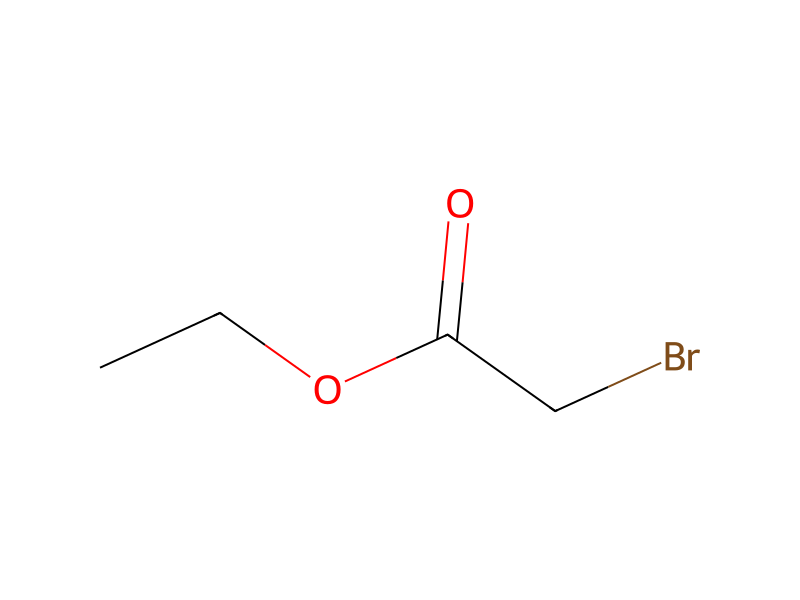
[C:1]([C:4]1[S:8][C:7]2[C:9]([Cl:15])=[C:10]([Cl:14])[C:11]([OH:13])=[CH:12][C:6]=2[CH:5]=1)(=[O:3])[CH3:2].Br[CH2:17][C:18]([O:20][CH2:21][CH3:22])=[O:19].C(=O)([O-])[O-].[K+].[K+].CN(C)C=O>CC(=O)CC>[Cl:14][C:10]1[C:11]([O:13][CH2:17][C:18]([O:20][CH2:21][CH3:22])=[O:19])=[CH:12][C:6]2[CH:5]=[C:4]([C:1](=[O:3])[CH3:2])[S:8][C:7]=2[C:9]=1[Cl:15]To a solution of 9.0 g of 2-acetyl-6,7-dichloro-5-hydroxybenzo[b]thiophene and 200 ml of 2-butanone is added a solution of 6.62 g of ethyl bromoacetate in 50 ml of 2-butanone, 5.2 g of potassium carbonate and 2.2 ml of dimethylformamide. The reaction mixture is heated under reflux for 2 hrs, allowed to cool and filtered. The filtrate is extracted with ether (3 times). The layers are separated and the organic phase is washed with water, saturated sodium chloride solution, dried and filtered. The filtrate is evaporated. The residue is dissolved in dichloromethane and chromatagraphed on alumina, using dichloromethane as the eluant. Evaporation of the eluant gives 5.1 g of ethyl [(6,7-dichloro-2-acetylbenzo[b]thien-5-yl)oxy]acetate.