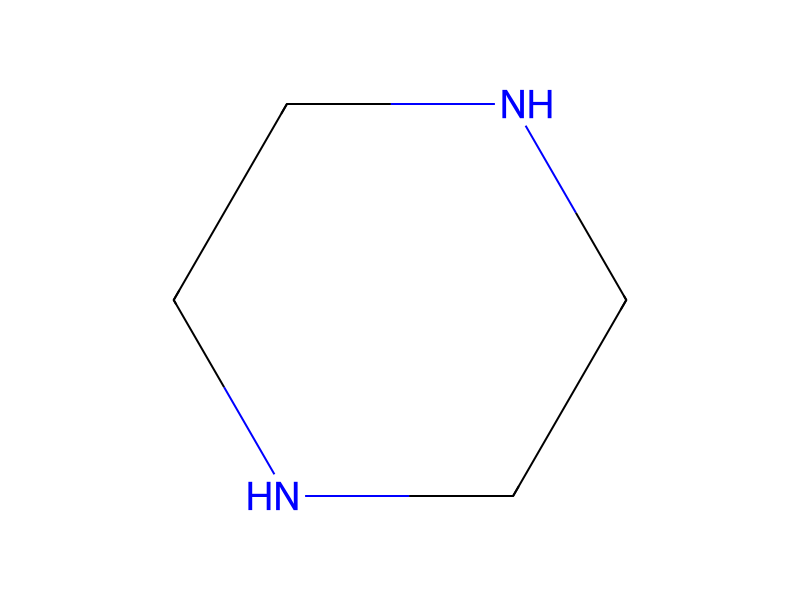
Piperazine → Ethyl 1-ethyl-6-fluoro-4-oxo-7-(piperazin-1-yl)-1,4-dihydro-1,8-naphthyridine-3-carboxylate
HRID 544213
반응식

[NH:1]1[CH2:6][CH2:5][NH:4][CH2:3][CH2:2]1.[CH2:7]([O:9][C:10]([C:12]1[C:21](=[O:22])[C:20]2[C:15](=[N:16][C:17](Cl)=[C:18]([F:23])[CH:19]=2)[N:14]([CH2:25][CH3:26])[CH:13]=1)=[O:11])[CH3:8]>C(O)C>[CH2:7]([O:9][C:10]([C:12]1[C:21](=[O:22])[C:20]2[C:15](=[N:16][C:17]([N:1]3[CH2:6][CH2:5][NH:4][CH2:3][CH2:2]3)=[C:18]([F:23])[CH:19]=2)[N:14]([CH2:25][CH3:26])[CH:13]=1)=[O:11])[CH3:8]참가 물질
4



실험 절차
A mixture of piperazine (0.86 g), the above ester (1.0 g) and ethanol (20 ml) was refluxed for 2.5 hrs. The solvent was evaporated, and the residue was extracted with chloroform. The chloroform layer was washed with water, dried over anhydrous sodium sulfate, and chloroform was evaporated. The residue was purified by chromatography to give 1-ethyl-6-fluoro-1,4-dihydro-4-oxo-7-(1-piperazinyl)-1,8-naphthyridine-3-carboxylic acid ethyl ester.