반응식

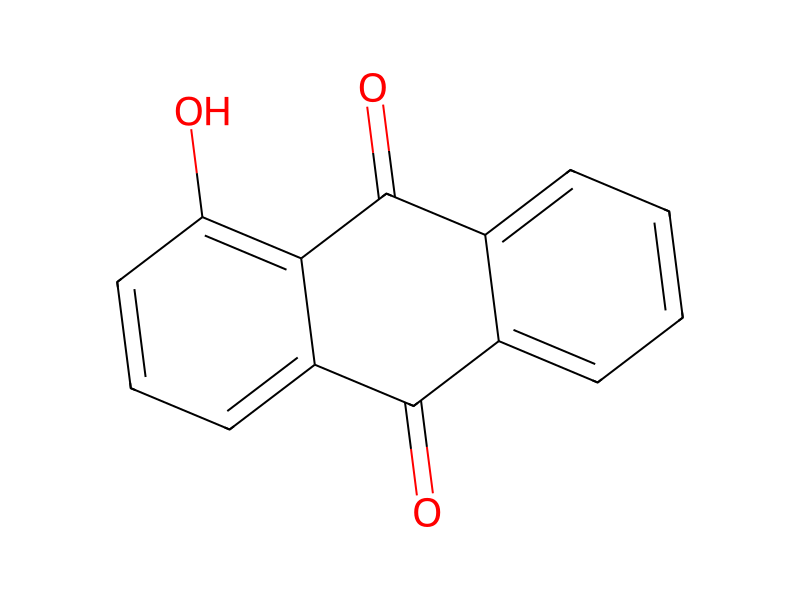
[C:1]1([S:17]([OH:20])(=[O:19])=[O:18])[C:14]2[C:13](=[O:15])[C:12]3[C:7](=[CH:8][CH:9]=[CH:10][CH:11]=3)[C:6](=[O:16])[C:5]=2[CH:4]=[CH:3][CH:2]=1.[S:21](=[O:25])(=[O:24])([OH:23])[OH:22]>>[OH:22][C:1]1[C:14]2[C:13](=[O:15])[C:12]3[C:7](=[CH:8][CH:9]=[CH:10][CH:11]=3)[C:6](=[O:16])[C:5]=2[CH:4]=[CH:3][CH:2]=1.[C:1]1([S:17]([OH:20])(=[O:18])=[O:19])[C:14]2[C:13](=[O:15])[C:12]3[C:7](=[CH:8][CH:9]=[CH:10][CH:11]=3)[C:6](=[O:16])[C:5]=2[CH:4]=[CH:3][CH:2]=1.[S:21](=[O:23])(=[O:22])([OH:25])[OH:24]참가 물질


실험 절차
1-Hydroxyanthraquinone is a known compound which can be obtained by several conventional techniques, for example, it can be obtained from 1-anthraquinonesulfonic acid by simply heating with alkali carbonates in aqueous solution under pressure. Alkali metal salts of 1-anthraquinonesulfonic acid can also be converted to the hydroxy derivative by heating with aqueous solutions of alkali metal and alkaline earth metal hydroxides. Upon acidification of the resulting reaction medium with an acid such as sulfuric acid, the 1-hydroxyanthraquinone precipitates in quite pure form. Alternatively, 1-hydroxyanthraquinone can be obtained directly from 1-anthraquinonesulfonic acid by treatment with water or dilute sulfuric acid in an autoclave at 200° to 300° C. Employing the above processes as well as other known processes for the preparation of 1-hydroxyanthraquinone, the compound can be obtained in crystalline form as pale yellow to orange needles having a melting point of about 190° C. The compound is insoluble in water, but is soluble in alcohols and organic solvents such as ethanol, propylene glycol, acetone, N-methyl pyrrolidone and the like.
후처리
- customthe 1-hydroxyanthraquinone precipitates in quite pure form
출처 및 근거
- ORD 기록
- ord-3533fc85db6f442496f7cd6d3a4276d9
- 출처 데이터셋
- uspto-grants-1984_05
- 특허 번호
- US04451278
연결된 노트
불러오는 중…