반응식
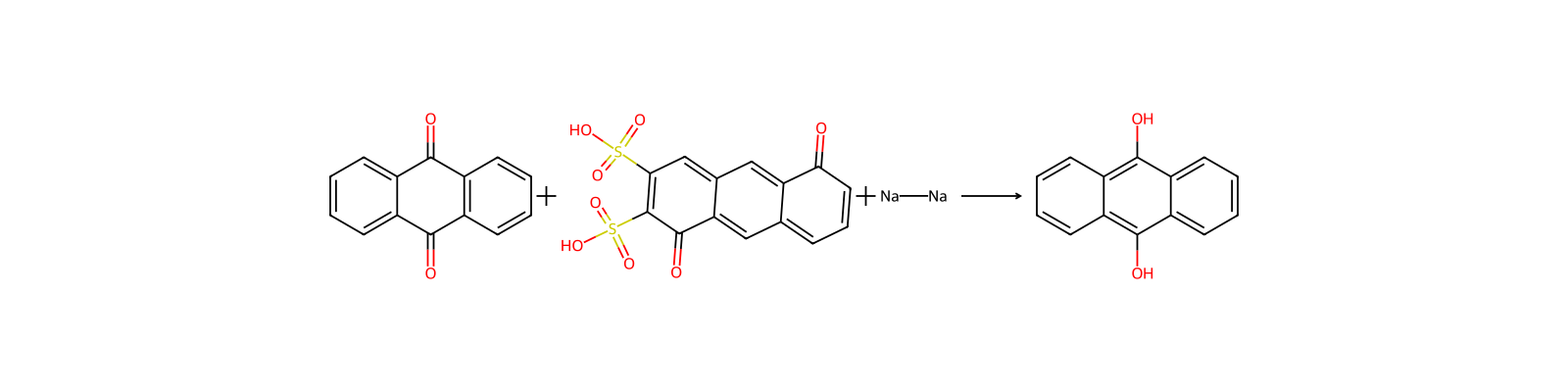
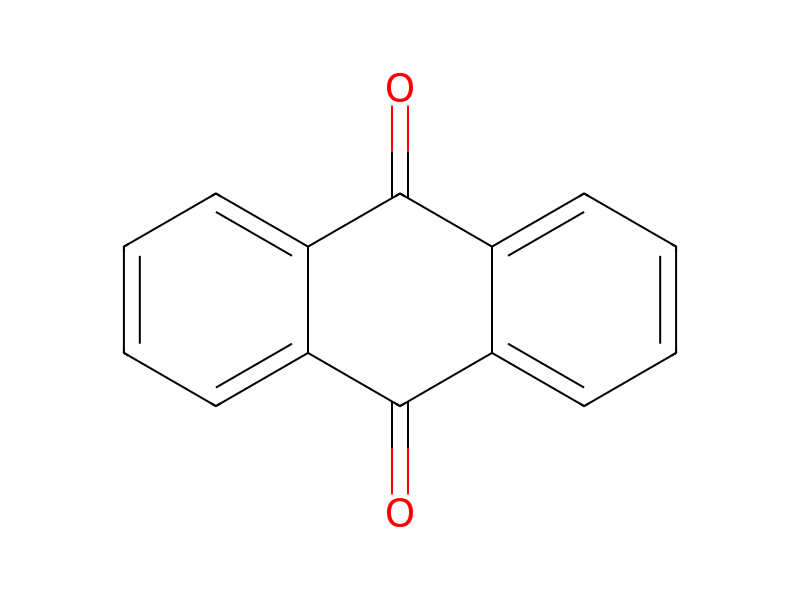
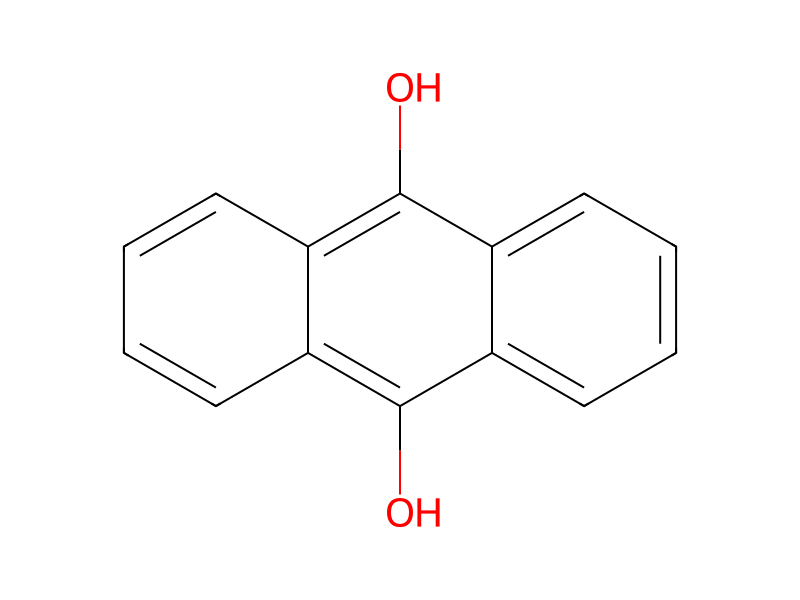
[CH:1]1[C:14]2[C:13](=[O:15])[C:12]3[C:7](=[CH:8][CH:9]=[CH:10][CH:11]=3)[C:6](=[O:16])[C:5]=2[CH:4]=[CH:3][CH:2]=1.C1(=O)C2C(C=C3C(C=2)=CC=CC3=O)=CC(S(O)(=O)=O)=C1S(O)(=O)=O.[Na][Na]>>[CH:10]1[CH:11]=[C:12]2[C:13]([OH:15])=[C:14]3[C:5](=[C:6]([OH:16])[C:7]2=[CH:8][CH:9]=1)[CH:4]=[CH:3][CH:2]=[CH:1]3참가 물질
4


실험 절차
The anthraquinone model compound (1,5-anthraquinonedisulfonic acid, disodium salt) and two polymers were subjected to the hydrogenation conditions. The reaction mixtures were analyzed with UV/visible spectroscopy following removal of the catalyst under an inert atmosphere (argon or nitrogen). Where anthrahydroquinone is formed, a bright yellow solution results. The results of some of the hydrogenation experiments are determined from the absorption spectra both before and after hydrogenation, and are summarized in Table 4.
후처리
- customThe reaction mixtures
- customremoval of the catalyst under an inert atmosphere (argon or nitrogen)
출처 및 근거
- ORD 기록
- ord-3950b6f93eb54f19842ce2fa60356bc9
- 출처 데이터셋
- uspto-grants-1997_04
- 특허 번호
- US05624543
연결된 노트
불러오는 중…