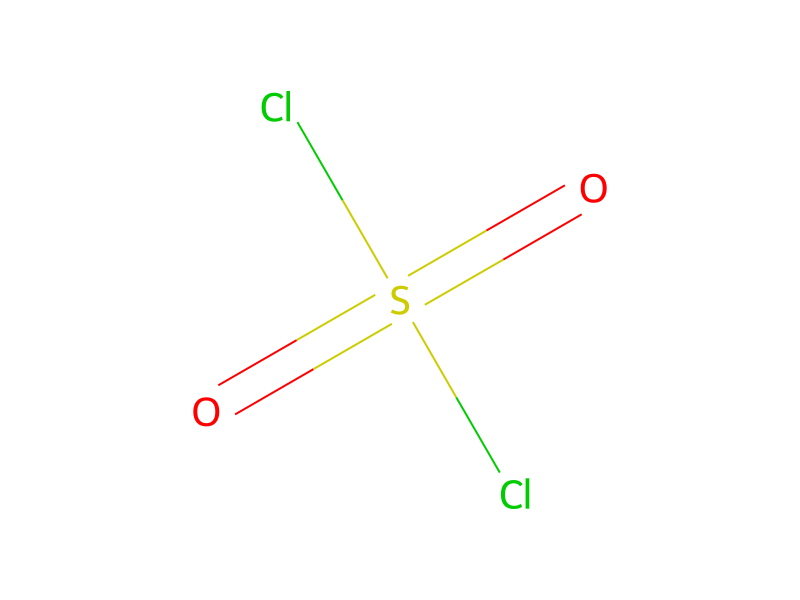
To 23.4 g of 3-(1,3-dioxolan-2-yl)thiophene (S. Gronowitz, et al., Arkiv. Kemi., 20, 407 (1963)) in 100 ml of anhydrous tetrahydrofuran was added 100 ml of 1.6 molar n-butyllithium in hexane, with ice bath cooling. After stirring at room temperature for 20 minutes the mixture was cooled to -78° and sulfuryl chloride (16.2 g) was then added dropwise. This addition caused the suspended solids to form a tarry mass which broke up when the mixture was allowed to warm to room temperature. After stirring one and one half hours at room temperature the mixture was cooled to -10° and 10 ml of ethyl acetate was added dropwise. The reaction mixture was then poured into ice water and extracted with ethyl ether. The ether portions were combined, dried over magnesium sulfate, filtered and the ether removed in-vacuo to yield 19.6 g of an oil. Infrared absorption spectra of this product showed peaks at 1330 and 1180 cm-1, consistent for the desired sulfonyl chloride. Mass spectrum analysis: calc. 254, found 253 (Mass-1H) and the presence of a chlorine atom.