반응식

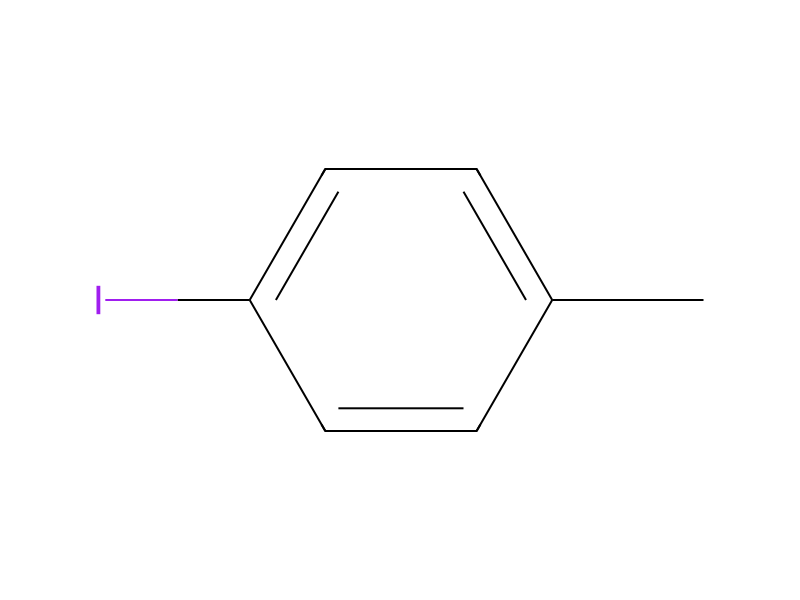
I[C:2]1[CH:7]=[CH:6][C:5]([CH3:8])=[CH:4][CH:3]=1.[C:9]1(Cl)[C:10](=[CH:14][C:15](=[CH:19][C:20]=1[N+:21]([O-:23])=[O:22])[N+:16]([O-:18])=[O:17])[N+:11]([O-:13])=[O:12]>[Cu]>[N+:21]([C:20]1[CH:19]=[C:15]([N+:16]([O-:18])=[O:17])[CH:14]=[C:10]([N+:11]([O-:13])=[O:12])[C:9]=1[C:2]1[CH:7]=[CH:6][C:5]([CH3:8])=[CH:4][CH:3]=1)([O-:23])=[O:22]참가 물질



실험 절차
4-iodotoluene is reacted with picryl chloride in the presence of copper bronze at 215° C. to yield 2′,4′,6′-trinitro-4-methylbiphenyl (1). C 7 H 7 I + C 6 H 2 Cl N 3 O 6 → Δ Cu C 13 H 9 I 3 N 3 O 6 2′,4′,6′-trinitro-4-methylbiphenyl (1) is reacted with stannous chloride and hydrochloric acid to yield 2′,4′,6′-triamino-4-methylbiphenyl (2). C 13 H 9 N 3 O 6 → H Cl Sn Cl 2 C 13 H 15 N 3 2′,4′,6′-triamino-4-methylbiphenyl (2) is reacted with sodium nitrite and hydrochloric acid to convert the amino groups to diazonium groups. The diazonium groups react with potassium iodide to yield 2′,4′,6′-triiodo-4-methylbiphenyl (3). C 13 H 15 N 3 → H Cl Na N O 2 → K I C 13 H 9 I 3 Aromatic nitration of 2′,4′,6′-triiodo-4-methylbiphenyl (3) is performed with nitric acid and sulfuric acid to yield a mixture of 2′,4′,6′-triiodo-2-nitro-4-methylbiphenyl (4) and 2′,4′,6′-triiodo-3-nitro-4-methylbiphenyl (5). The products are separated using column chromatography. C 13 H 9 I 3 → H 2 S O 4 H N O 3 C 13 H 8 I 3 N O 2 The methyl group of 2′,4′,6′-triiodo-3-nitro-4-methylbiphenyl (5) is oxidized by potassium permanganate to yield 2′,4′,6′-triiodo-3-nitrobiphenyl-4-carboxylic acid (6). C 13 H 8 I 3 N O 2 → K Mn O 4 C 13 H 6 I 3 N O 4 2′,4′,6′-triiodo-3-nitrobiphenyl-4-carboxylic acid (6) is reacted with thionyl chloride to yield 2′,4′,6′-triiodo-3-nitrobiphenyl-4-carbonyl chloride (7). C 13 H 6 I 3 N O 4 → S O Cl 2 C 13 H 5 Cl I 3 N O 3 The hydroxyl groups of D-Glucosamine (8) are protected by reaction with acetic anhydride in the presence of pyridine to yield 1,3,4,6-tetra-O-acetyl-D-glucosamine (9). C 6 H 13 N O 5 → C 5 H 5 N C 4 H 6 O 3 C 14 H 21 N O 9 1,3,4,6-tetra-O-acetyl-D-glucosamine (9) is reacted with 2′,4′,6′-triiodo-3-nitrobiphenyl-4-carbonyl chloride (7) to yield 2-nitro-4-(2′,4′,6′-triiodophenyl)-benzoyl-1,3,4,6-tetra-O-acetyl-D-glucosamine (10). C14H21NO9+C13H5ClI3NO3→C27H25I3N2O12 2-nitro-4-(2′,4′,6′-triiodophenyl)-benzoyl-1,3,4,6-tetra-O-acetyl-D-glucosamine (10) is treated with stannous chloride in the presence of hydrochloric acid to yield 2-amino-4-(2′,4′,6′-triiodophenyl)-benzoyl-D-glucosamine (11). C 27 H 25 I 3 N 2 O 12 → Sn Cl 2 , H Cl C 19 H 19 I 3 N 2 O 6
출처 및 근거
- ORD 기록
- ord-ad0626f920f84a99ab972b49823c1761
- 출처 데이터셋
- uspto-grants-2005_08
- 특허 번호
- US06923950B2
연결된 노트
불러오는 중…