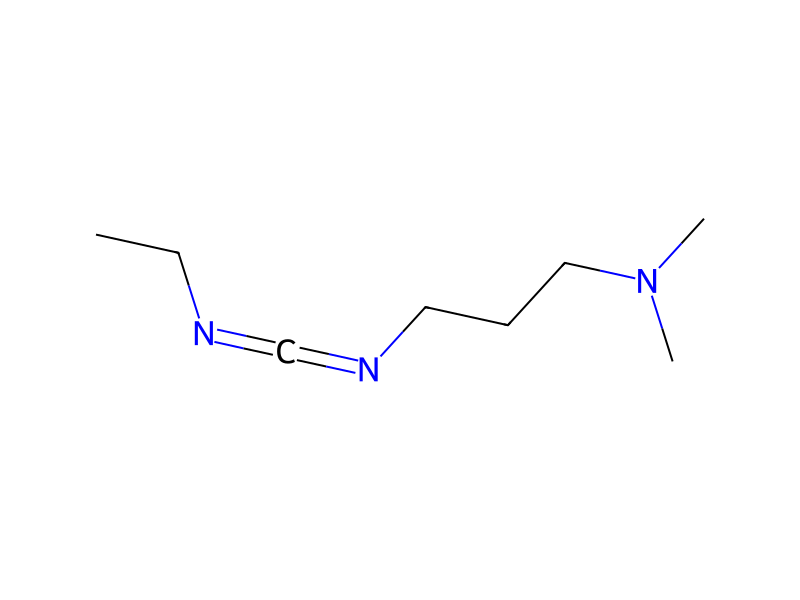
To a mixture of 2-(4,5-dichloro-2-methoxyphenylamino)acetic acid (260 mg, 1.04 mmol), EDCI (273 mg, 1.43 mmol), HOBt (194 mg, 1.43 mmol) and Et3N (288 mg 2.85 mmol) in DCM (10 mL) at 0° C., piperazine-2-carbonitrile was added. The resulting mixture was stirred at RT for 8 h. The mixture was partitioned between dichloromethane and water. The organic layer was washed with brine, dried over MgSO4, filtered and concentrated in vacuo. The residue was purified by flash column chromatography on silica gel (dichloromethane/methanol=50:1) to afford the desired product (108 mg, 30% yield).