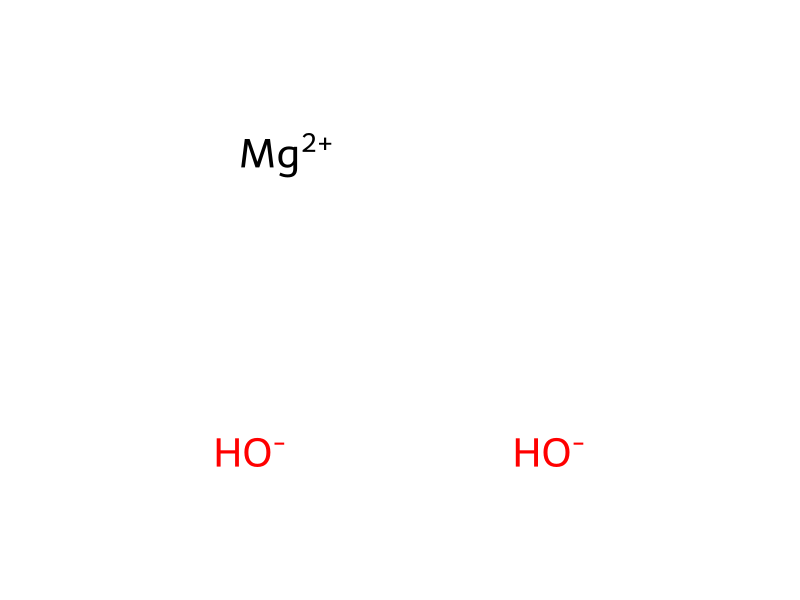
Magnesium hydroxide (3.5 g.) in water (6 cc.) is added to a solution, heated to 60° C, of N,N'-diacetyl-L-lysine (55.2 g.) and water (360 cc.), and then the reaction mixture is kept at 60° C for 30 minutes with stirring. A suspension of aluminium isopropoxide (24.5 g.) in isopropanol (30 cc.) is then added with stirring and while keeping the temperature at 60° C. The isopropanol is removed by distillation under reduced pressure (25 mm Hg). The reaction mixture is then filtered in order to remove insoluble material and the filtrate concentrated to dryness under reduced pressure (25 mm Hg) at 50° C. The paste-like residue obtained is triturated three times in acetone and then dried under reduced pressure (25 mm Hg). A solid is thus obtained which is washed by filtration using acetone (3 × 150 cc.). After drying, a mixed aluminium magnesium salt of N,N'-diacetyl-L-lysine (60.35 g.) corresponding to the formula: ##EQU11## is obtained.