반응식

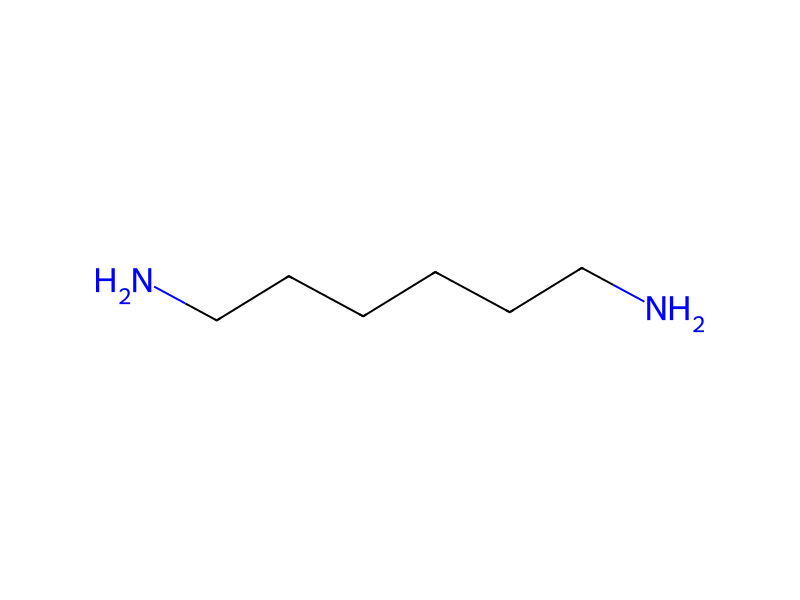
[NH2:1][CH2:2][CH2:3][CH2:4][CH2:5][CH2:6][CH2:7][NH2:8].[CH2:9]([S:17]([Cl:20])(=[O:19])=[O:18])[CH2:10][CH2:11][CH2:12][S:13]([Cl:16])(=[O:15])=[O:14]>>[CH2:9]([S:17]([Cl:20])(=[O:18])=[O:19])[CH2:10][CH2:11][CH2:12][S:13]([Cl:16])(=[O:15])=[O:14].[NH2:1][CH2:2][CH2:3][CH2:4][CH2:5][CH2:6][CH2:7][NH2:8]참가 물질
3


실험 절차
Next, the 1,6-diaminohexane vapor in the condensing chamber 2 was adiabatically expanded, and the introduced base particles were exposed thereto for 3 minutes. Consequently, a polymerization reaction between 1,4-butanedisulfonyl chloride and 1,6-diaminohexane took place on the surface of the base particles, forming a film of 1,4-butanedisulfonylchloride-1,6-diaminohexane co-polymer.
출처 및 근거
- ORD 기록
- ord-e38bf358eaab4352b72a0318515e2db2
- 출처 데이터셋
- uspto-grants-2001_02
- 특허 번호
- US06194487B1
연결된 노트
불러오는 중…