6-Isocyanato-2,2,4,4-tetrefluoro-1,3-benzodioxene → HCID 59987451, 화합물
반응식

[CH3:1][NH:2][C:3]([C:5]1[CH:10]=[C:9]([O:11][C:12]2[CH:18]=[CH:17][C:15]([NH2:16])=[CH:14][CH:13]=2)[CH:8]=[CH:7][N:6]=1)=[O:4].[CH:19]1[C:24]([N:25]=[C:26]=[O:27])=[CH:23][C:22]2[C:28]([F:35])([F:34])[O:29][C:30]([F:33])([F:32])[O:31][C:21]=2[CH:20]=1>C(Cl)Cl>[CH3:1][NH:2][C:3]([C:5]1[CH:10]=[C:9]([O:11][C:12]2[CH:18]=[CH:17][C:15]([NH:16][C:26]([NH:25][C:24]3[CH:19]=[CH:20][C:21]4[O:31][C:30]([F:33])([F:32])[O:29][C:28]([F:34])([F:35])[C:22]=4[CH:23]=3)=[O:27])=[CH:14][CH:13]=2)[CH:8]=[CH:7][N:6]=1)=[O:4]참가 물질
4

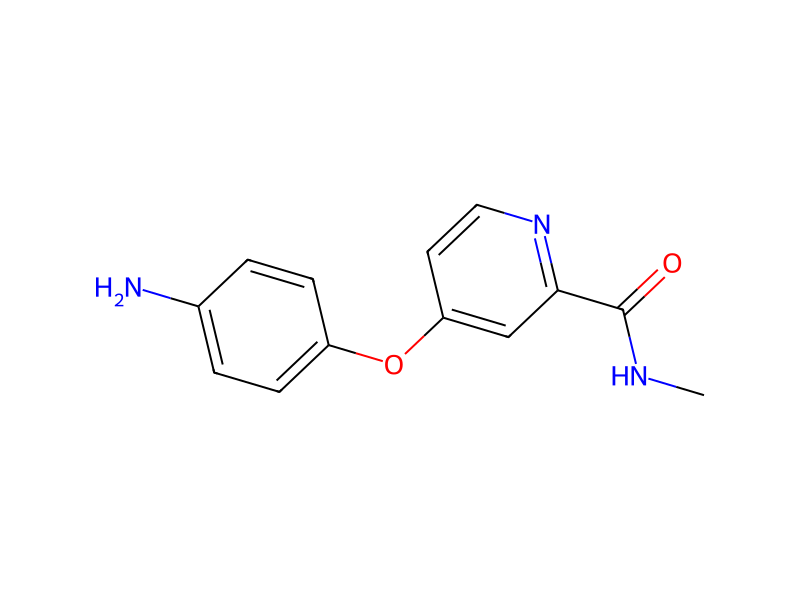


실험 절차
To a slurry of 4-(2-(N-methylcarbamoyl)-4-pyridyloxy)aniline (143 mg, 0.59 mmol) in DCM (1 mL) at 0° C. was added dropwise a solution of 2,2,4,4-tetrafluoro-6-isocyanato-1,3-benzodioxene (150 mg, 0.60 mmol) in DCM (1 mL). The reaction mixture was stirred at room temperature for 12 h. The resulting precipitate was filtered and washed with DCM to afford the desired product (125 mg, 41%) as a white solid.