홈MCP워크벤치Skills
홈워크벤치알림마이페이지
llms.txt · MCP 가이드개인정보처리방침 · 이용약관 · 지원v1.8.3
  1. 홈
  2. /반응

Potassium Carbonate → (R)-3-(4-Trifluoromethyl-phenylamino)-valeric acid

HRID 661444
인쇄

반응식

HRID 661444 반응식
Br[C:2]1[CH:7]=[CH:6][C:5]([C:8]([F:11])([F:10])[F:9])=[CH:4][CH:3]=1.[NH2:12][C@H:13]([CH2:18][CH3:19])[CH2:14][C:15]([OH:17])=[O:16].C(=O)([O-])[O-].[K+].[K+]>CN(C)C=O.[Cu](I)I>[F:9][C:8]([F:11])([F:10])[C:5]1[CH:6]=[CH:7][C:2]([NH:12][C@H:13]([CH2:18][CH3:19])[CH2:14][C:15]([OH:17])=[O:16])=[CH:3][CH:4]=1
참가 물질실험 절차후처리출처 및 근거반응 노트

참가 물질

6

반응물 3

HCID 11430Potassium CarbonateHCID 67872Benzene, 1-bromo-4-(trifluoromethyl)-HCID 14731979(3R)-3-Aminopentanoic acid

생성물 1

HCID 57972811(R)-3-(4-Trifluoromethyl-phenylamino)-valeric acid

시약·촉매·용매 2

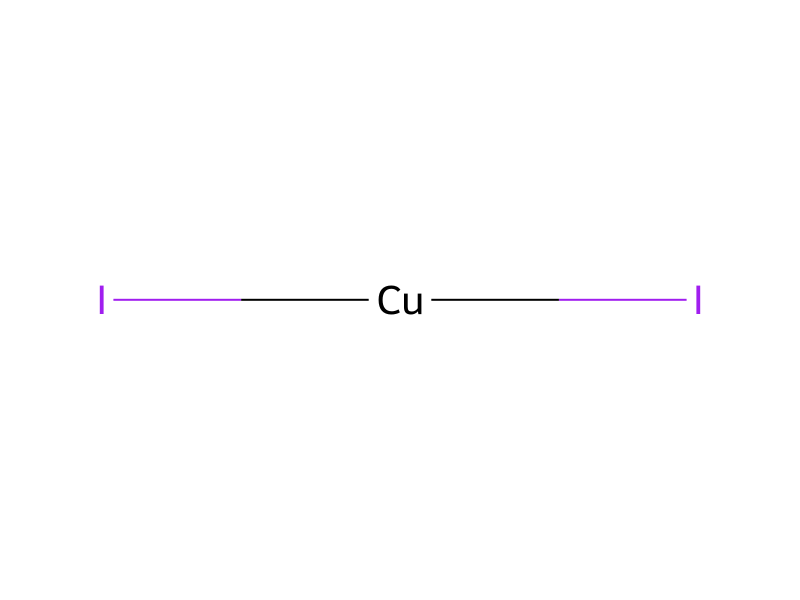
HCID 83717Copper iodide촉매HCID 6228
Dimethylformamide
용매

실험 절차

To a solution of 1-bromo-4-trifluoromethylbenzene (2530 g, 11.24 mole) and (R)-3-aminovaleric acid (659 g, 5.63 mole) in N,N-dimethylformamide (12 liter), were added copper iodide (210 g, 1.10 mole) and potassium carbonate (2330 g, 16.86 mole), and the mixture was sealed under nitrogen atmosphere and stirred at 100° C.-120° C. for about 60 hours. When the reaction was completed, the reaction mixture was concentrated in vacuo at 60° C.-70° C. of the bath temperature, the residue was dissolved in water (6.0 liter) and the solution was adjusted to pH about 5.0 with addition of hydrochloric acid. Ethyl acetate (6.0 liter) was added and the mixture was stirred, filtered and washed with ethyl acetate (2.4 liter). The filtrate was separated and the aqueous layer was extracted with ethyl acetate (3.6 liter). The organic layer was combined and extracted with 25% ammonia water (3.0 liter) and water (3 liter). The aqueous layer was acidified to pH about 5.0 with addition of hydrochloric acid, and extracted with ethyl acetate (6.0 liter). The organic layer was dried over magnesium sulfate (600 g), filtered and washed with ethyl acetate (2.4 liter). The filtrate was concentrated in vacuo at 45° C.-55° C. of the bath temperature, and the titled compound was obtained as an oily residue, which was used in the next step without further purification.


후처리

  1. customthe mixture was sealed under nitrogen atmosphere
  2. concentrationthe reaction mixture was concentrated in vacuo at 60° C.-70° C. of the bath temperature
  3. dissolutionthe residue was dissolved in water (6.0 liter)
  4. additionthe solution was adjusted to pH about 5.0 with addition of hydrochloric acid
  5. additionEthyl acetate (6.0 liter) was added
  6. stirringthe mixture was stirred
  7. filtrationfiltered
  8. washwashed with ethyl acetate (2.4 liter)
  9. customThe filtrate was separated
  10. extractionthe aqueous layer was extracted with ethyl acetate (3.6 liter)
  11. extractionextracted with 25% ammonia water (3.0 liter) and water (3 liter)
  12. additionThe aqueous layer was acidified to pH about 5.0 with addition of hydrochloric acid
  13. extractionextracted with ethyl acetate (6.0 liter)
  14. dry with materialThe organic layer was dried over magnesium sulfate (600 g)
  15. filtrationfiltered
  16. washwashed with ethyl acetate (2.4 liter)
  17. concentrationThe filtrate was concentrated in vacuo at 45° C.-55° C. of the bath temperature

출처 및 근거

ORD 기록
ord-90e1941bb9694e3faae499bd26aebd06
출처 데이터셋
uspto-grants-2011_12
DOI
10.6084/m9.figshare.5104873.v1
특허 번호
US08084611B2

반응 노트

이 페이지에서참가 물질실험 절차후처리출처 및 근거반응 노트