3-(2-dimethylamino-ethyl)-1H-indole-5-carbaldehyde → 3-[2-(N,N-Dimethylamino)ethyl]-5-vinyl-1H-indole
반응식

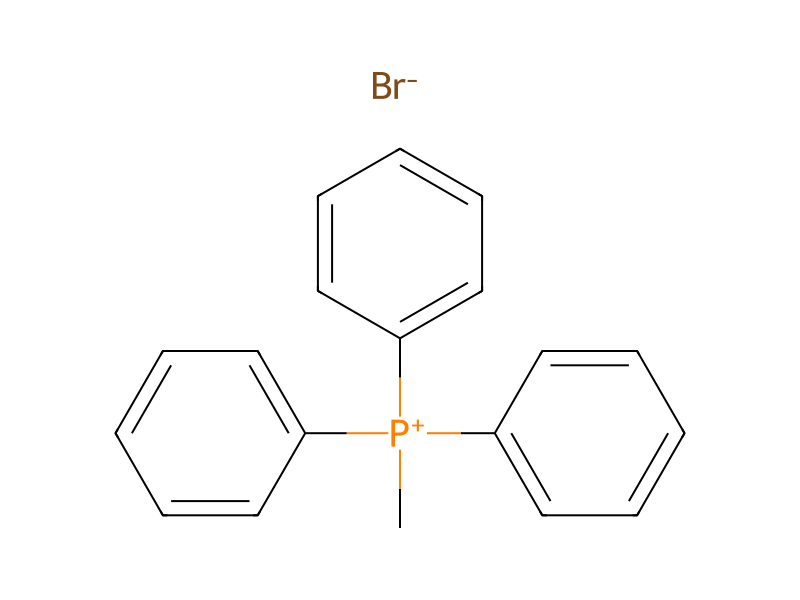
[CH3:1][N:2]([CH3:16])[CH2:3][CH2:4][C:5]1[C:13]2[C:8](=[CH:9][CH:10]=[C:11]([CH:14]=O)[CH:12]=2)[NH:7][CH:6]=1.[CH3:17]C(C)([O-])C.[K+]>C1COCC1.[Br-].C[P+](C1C=CC=CC=1)(C1C=CC=CC=1)C1C=CC=CC=1>[CH3:1][N:2]([CH3:16])[CH2:3][CH2:4][C:5]1[C:13]2[C:8](=[CH:9][CH:10]=[C:11]([CH:14]=[CH2:17])[CH:12]=2)[NH:7][CH:6]=1참가 물질




실험 절차
To a solution of 3-(2-dimethylamino-ethyl)-1H-indole-5-carbaldehyde (Example 13) (0.216 g, 1 mmol) in THF (5 mL), methyl triphenyl phosphonium bromide (0.393 g, 1.1 mmol) is added. To the obtained slurry, under an argon atmosphere potassium tert-butoxide (0.118 g, 1.05 mmol) is added in three portions at ambient temperature. When thin layer chromatography (TLC) indicates complete conversion of the aldehyde, the mixture is poured on ice and extracted with ethyl acetate. Removal of the solvent gives a residue which is chromatographed on silica (25 g, CHCl3, MeOH, NEt3 19:1:0.5 v:v:v) to give the title product as pale yellow oil (0.190 g, 88%). 1H-NMR (CDCl3, 300 MHz) δ 2.37 (s, 6H, N(CH3)2); 2.64-2.70 (m, 2H, CH2NMe2); 2.92-2.99 (m, 2H, CH2); 5.13 (d, 1H, J=10.9 Hz, cis H2C═CH); 5.69 (d, 1H, J=17.6 Hz, trans H2C═CH); 6.84 (dd, 1H, H2C═CH); 6.94 (br s, 1H, H-2); 7.24 (d, 1H, J=8.2 Hz, H-7); 7.31 (dd, J=1.8 Hz, H-6); 7.58 (d, 1H, H-4); 8.66 (br s, 1H, NH). 13C-NMR (CDCl3, 75 MHz) δ 24.00 (CH2); 45.73 (N(CH3)2); 60.62 (CH2NMe2); 110.93 (H2C═CH); 111.50 (C-7); 114.66 (C-3); 117.41 (C-4); 120.20 (C-6); 122.42 (C-2); 127.83 (C-5); 129.34 (C-9); 136.45 (C-8); 138.22 (H2C═CH).
후처리
- additionthe mixture is poured on ice
- extractionextracted with ethyl acetate
- customRemoval of the solvent
- customgives a residue which
- customis chromatographed on silica (25 g, CHCl3, MeOH, NEt3 19:1:0.5 v:v:v)
출처 및 근거
- ORD 기록
- ord-fc1974ae3ec64dd49a5ce6553fb3cee2
- 출처 데이터셋
- uspto-grants-2014_09
- 특허 번호
- US08822702B2
반응 노트
불러오는 중…