반응식

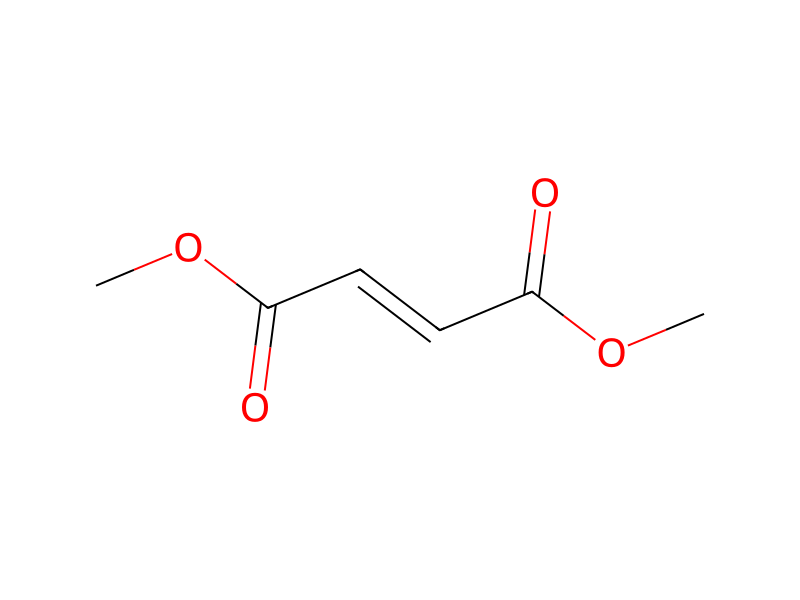
[C:1]([O:9][CH3:10])(=[O:8])/[CH:2]=[CH:3]/[C:4]([O:6][CH3:7])=[O:5]>O>[CH:2]1([C:1]([O:9][CH3:10])=[O:8])[CH:3]([C:4]([O:6][CH3:7])=[O:5])[CH:2]([C:1]([O:9][CH3:10])=[O:8])[CH:3]1[C:4]([O:6][CH3:7])=[O:5]참가 물질


실험 절차
The dimethyl fumarate (1224 g, 8.5 mol) and water (4000 ml) were added to a 6-liter flask and irradiated by 365 nm ultraviolet lights at a temperature from 5 to 7° C. for 7 hours. The resultant solid in the flask was vacuum filtered to obtain tetramethyl cyclobutane-1,2,3,4-tetracarboxylate (1224 g, 4.25 mol). According to the NMR spectrum as shown in FIG. 1, dimethyl fumarate was present before the cyclization reaction. It can be observed from FIG. 2 that, after the cyclization reaction, the absorption peak at 6.77 ppm disappeared which means that dimethyl fumarate had been reacted completely. The absorption peak at 3.68 ppm represents the generation of the corresponding cyclobutanetetracarboxylate. FIGS. 1 and 2 prove that the yield of the reaction is almost 100%.
후처리
- customirradiated by 365 nm ultraviolet lights at a temperature from 5 to 7° C. for 7 hours
- filtrationfiltered
출처 및 근거
- ORD 기록
- ord-f40ef0cbe9bd4178bc07ea3448a2523f
- 출처 데이터셋
- uspto-grants-2008_07
- 특허 번호
- US07402693B2
연결된 노트
불러오는 중…