홈MCPSkills워크벤치OpenChem
홈워크벤치알림마이페이지
llms.txt · skill.md · MCP 가이드개인정보처리방침 · 이용약관 · 지원v1.8.6
  1. 홈
  2. /반응

Water → 3-[(3R,4S)-3-Hydroxytetrahydro-2H-pyran-4-yl]-6-(4-morpholin-4-ylbenzyl)benzo[h]quinazolin-4(3H)-one

HRID 82452
인쇄

반응식

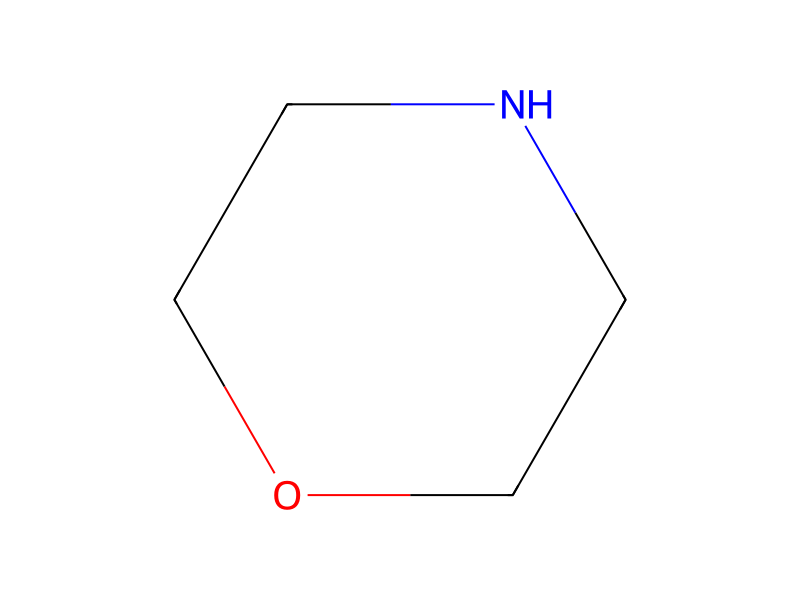
Cl[C:2]1[CH:30]=[CH:29][C:5]([CH2:6][C:7]2[CH:8]=[C:9]3[C:14](=[C:15]4[CH:20]=[CH:19][CH:18]=[CH:17][C:16]=24)[N:13]=[CH:12][N:11]([C@H:21]2[CH2:26][CH2:25][O:24][CH2:23][C@@H:22]2[OH:27])[C:10]3=[O:28])=[CH:4][CH:3]=1.[NH:31]1[CH2:36][CH2:35][O:34][CH2:33][CH2:32]1.C(=O)([O-])[O-].[Cs+].[Cs+].O>CN(C=O)C.CC(C)([P](C(C)(C)C)([Pd][P](C(C)(C)C)(C(C)(C)C)C(C)(C)C)C(C)(C)C)C>[OH:27][C@@H:22]1[C@@H:21]([N:11]2[C:10](=[O:28])[C:9]3[C:14](=[C:15]4[CH:20]=[CH:19][CH:18]=[CH:17][C:16]4=[C:7]([CH2:6][C:5]4[CH:4]=[CH:3][C:2]([N:31]5[CH2:36][CH2:35][O:34][CH2:33][CH2:32]5)=[CH:30][CH:29]=4)[CH:8]=3)[N:13]=[CH:12]2)[CH2:26][CH2:25][O:24][CH2:23]1
참가 물질반응 조건실험 절차후처리출처 및 근거반응 노트

참가 물질

7

반응물 4

HCID 962WaterHCID 8083MorpholineHCID 10796Cesium carbonateHCID 679704906-(4-Chlorobenzyl)-3-[(3R,4S)-3-hydroxytetrahydro-2H-pyran-4-yl]benzo[h]quinazolin-4(3H)-one

생성물 1

HCID 510007823-[(3R,4S)-3-Hydroxytetrahydro-2H-pyran-4-yl]-6-(4-morpholin-4-ylbenzyl)benzo[h]quinazolin-4(3H)-one

시약·촉매·용매 2

HCID 178418851
HCID 178418851, 화합물
촉매
HCID 6228Dimethylformamide용매

반응 조건

온도
65 °C

실험 절차

To a solution of 6-(4-chlorobenzyl)-3-[(3R,4S)-3-hydroxytetrahydro-2H-pyran-4-yl]benzo[h]quinazolin-4(3H)-one (0.100 g, 0.238 mmol) in 2 mL of DMF under an atmosphere of nitrogen was added morpholine (0.083 g, 0.95 mmol), bis(tri-tert-butylphosphine)palladium(0) (0.012 g, 0.024 mmol), cesium carbonate (0.232 g, 0.713 mmol), and 0.2 mL of water. The mixture was warmed to 65° C. for 5 min, flushed with nitrogen, and irradiated in a microwave reactor at 130° C. for 25 min. The reaction was cooled to rt and diluted with water and dichloromethane. The aqueous layer was reextracted with dichloromethane and the combined organic fractions were dried over sodium sulfate, filtered, and concentrated in vacuo. The residue was purified via silica gel chromatography, eluting with 0-4% methanol in dichloromethane to provide the title compound that gave proton NMR spectra consistent with theory and a mass ion (ES+) of 471.9 for [M+H]+: 1H NMR (400 MHz, CDCl3) δ 9.01 (s, 1H), 8.30 (s, 1H), 8.01-7.98 (m, 2H), 7.65-7.59 (m, 2H), 7.07 (d, J=8.7 Hz, 2H), 7.77 (d, J=8.7 Hz, 2H), 4.89-4.82 (m, 1H), 4.35 (s, 2H), 4.22-4.18 (m, 1H), 4.13-4.08 (m, 2H), 3.79 (t, J=4.8 Hz, 4H), 3.59-3.52 (m, 1H), 3.34-3.28 (m, 1H), 3.06 (t, J=4.8 Hz, 4H), 2.66 (br 5, 1H), 2.32-2.22 (m, 1H), 2.03-1.99 (m, 1H).

후처리

  1. customflushed with nitrogen
  2. customirradiated in a microwave reactor at 130° C. for 25 min
  3. temperatureThe reaction was cooled to rt
  4. additiondiluted with water and dichloromethane
  5. dry with materialthe combined organic fractions were dried over sodium sulfate
  6. filtrationfiltered
  7. concentrationconcentrated in vacuo
  8. customThe residue was purified via silica gel chromatography
  9. washeluting with 0-4% methanol in dichloromethane

출처 및 근거

ORD 기록
ord-ed9952d8612149a480852fa760966513
출처 데이터셋
uspto-grants-2014_09
DOI
10.6084/m9.figshare.5104873.v1
특허 번호
US08846702B2

반응 노트

이 페이지에서참가 물질반응 조건실험 절차후처리출처 및 근거반응 노트