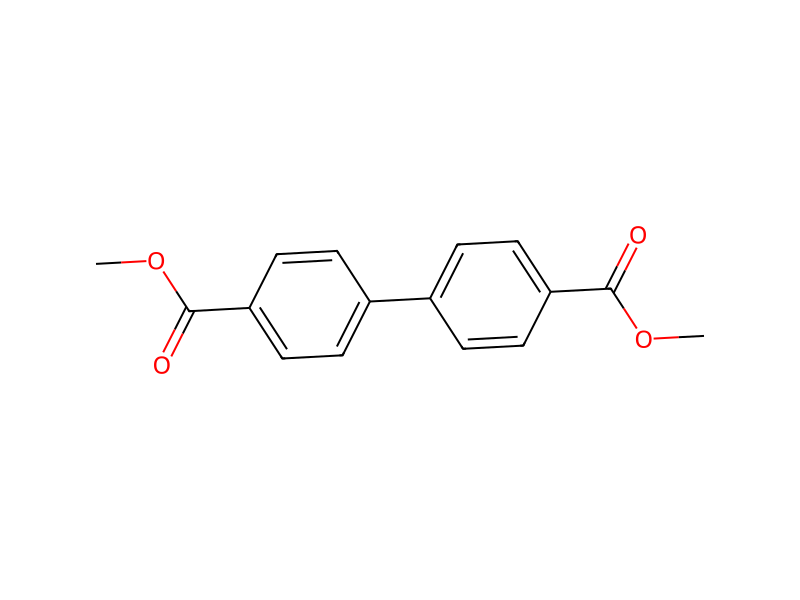
Dimethyl 3,4'-biphenyldicarboxylate (6.00 g, 0.0222 mole), 18.00 g (0.0666 mole) of dimethyl 4,4'-biphenyldicarboxylate, 12.83 g of ethylene glycol and 20 μL of titanium tetraisopropoxide are added to a 100 mL round bottom flask equipped with a paddle stirrer, 15-cm heated Vigreaux column, distillation head, condenser and graduated receiver. The apparatus is evacuated and refilled with nitrogen three times. A molten salt bath preheated to 220° C. is raised around the flask. After 2 hours, the temperature is slowly increased to 280° C. This takes 41 minutes. During this time, 6.9 mL of distillate is collected. Over the next 34 minutes, the pressure is slowly reduced to 1 mm of Hg and the temperature is raised to 321° C. The excess ethylene glycol is distilled. After an additional 10 minutes, the reaction mass is a viscous clear polymeric melt and the polymerization is stopped. As the molten polymer cools, it solidifies to an opaque off-white solid. The polymer is ground to a course powder in a centrifugal mill. Its inherent viscosity is 1.47 dL/g and its peak melting point as determined by differential scanning calorimetry is 280° C.