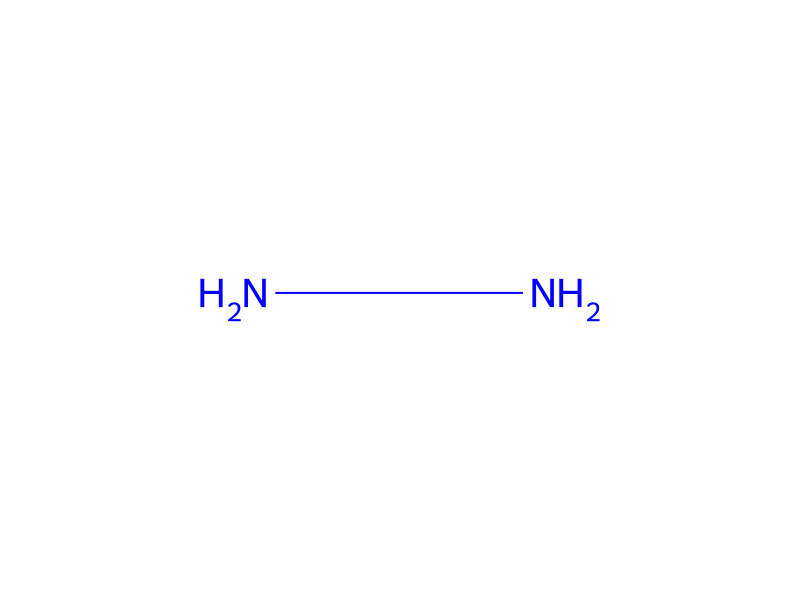
To 15.6 g of a monohydrate of hydrazine was added a solution of 5.0 g of 4-(3-butenyl)benzaldehyde (synthesized by reacting 1-(3-butenyl)-4-bromobenzene with magnesium to prepare a Grignard reagent which is then reacted with DMF) in 20 ml of ethanol. The mixture was stirred at room temperature for 30 minutes. To the mixture was then added 20 ml of saturated aqueous solution of sodium bicarbonate. To the mixture was then added 10 ml of dichloromethane. The mixture was then washed with 10 ml of saturated aqueous solution of sodium bicarbonate twice. To the resulting organic phase was then added 3.5 ml of triethylamine. The mixture was then dehydrated and dried over anhydrous sodium sulfate. The solvent was then distilled off under reduced pressure. To the residue was then added 3.5 ml of triethylamine. To the mixture were then added 20 ml of ethanol and 3.75 g of 4-methylbenzaldehyde. The mixture was then stirred at room temperature for 3 hours. To the mixture was then added 20 ml of saturated aqueous solution of sodium bicarbonate. To the mixture was then added 10 ml of dichloromethane. The mixture was then washed with 10 ml of saturated aqueous solution of sodium bicarbonate. The solvent was then distilled off under reduced pressure. The residue was purified through alumina (basic) column chromatography (dichloromethane), and then recrystallized from methanol to obtain 7.0 g of 1-[4-(3-butenyl)benzylidene]-2-(4-methylbenzylidene)hydrazine. The compound thus obtained had a melting point of 82° C. and exhibited nematic phase up to 103° C.