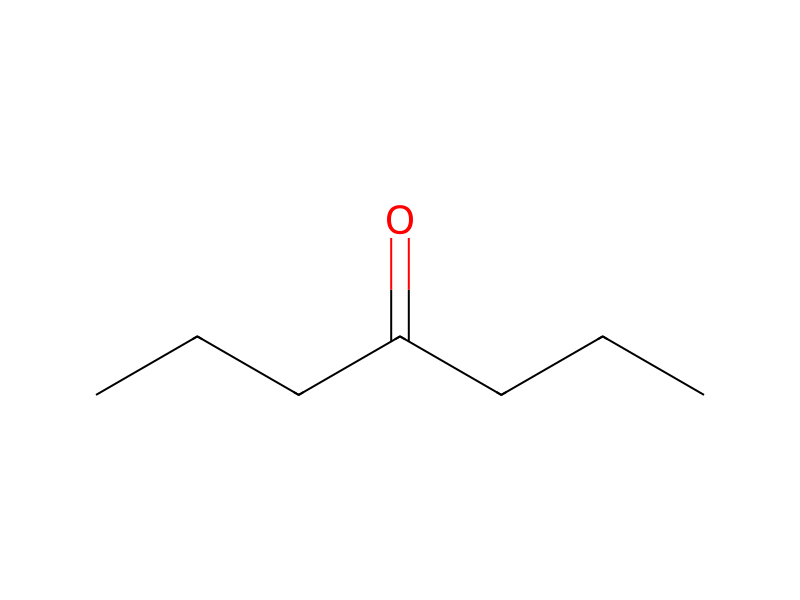
[Br:1][C:2]1[C:10]2[C:6](=[CH:7][N:8]([CH3:11])[N:9]=2)[CH:5]=[CH:4][CH:3]=1.C([N-]C(C)C)(C)C.[Li+].CCCCCCC.C(C1C=CC=CC=1)C.C1COCC1.[CH3:40][CH2:41][CH2:42][C:43](=[O:47])[CH2:44][CH2:45][CH3:46].C([O-])(O)=O.[Na+]>C1COCC1>[Br:1][C:2]1[C:10]2[C:6](=[C:7]([C:43]([OH:47])([CH2:44][CH2:45][CH3:46])[CH2:42][CH2:41][CH3:40])[N:8]([CH3:11])[N:9]=2)[CH:5]=[CH:4][CH:3]=1To a solution of 7-bromo-2-methyl-2H-indazole (1.5 g, 7.1 mmol) in 18 mL of THF at −78° C. was added a 2 M solution of lithium diisopropylamide in heptane/ethylbenzene/THF (5.3 mL, 11 mmol). The solution was stirred at 0-5° C. for 10 m, then rechilled to −78° C. To it was added 4-heptanone (1.49 mL, 10.6 mmol), and the solution was stirred overnight, allowing to slowly warm to room temperature. A saturated aqueous NaHCO3 solution (40 mL) was added, and the mixture was extracted with three 30 mL portions of ethyl acetate. The combined organic layers were dried over Na2SO4, filtered, and concentrated to a brown solid. Column chromatography (0→20% EtOAc/hexanes) afforded 4-(7-bromo-2-methyl-2H-indazol-3-yl)-heptan-4-ol (42; 1.80 g; 78%).