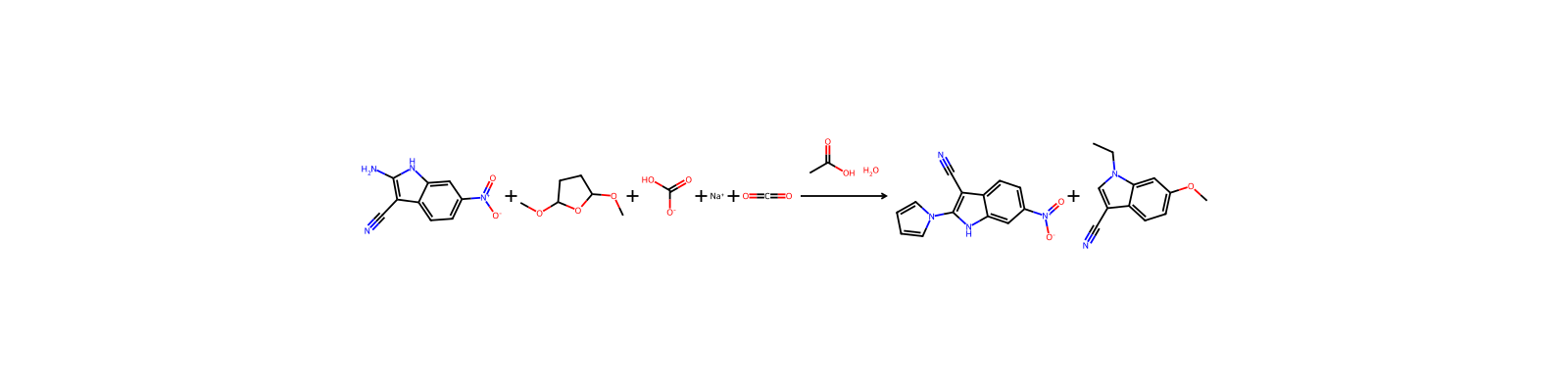
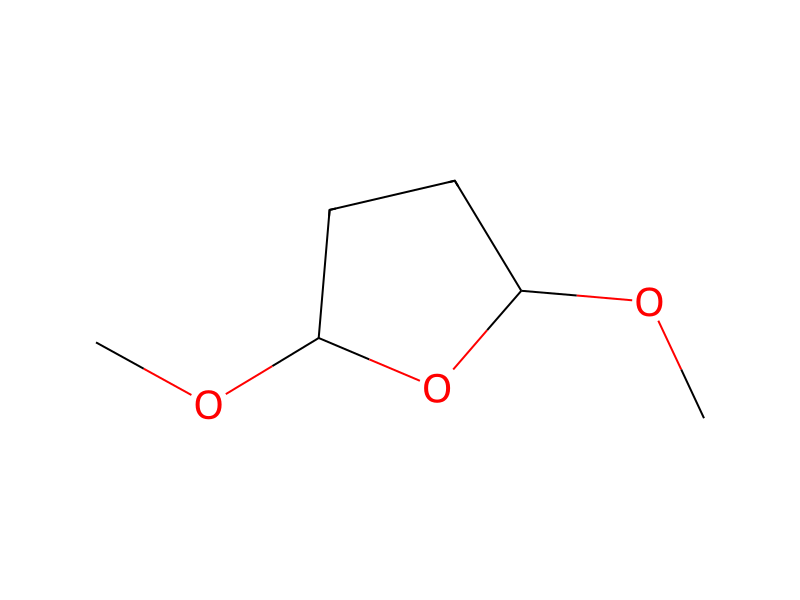
A solution of 2-amino-6-nitro-1H-indole-3-carbonitrile (362 mg, 1.79 mmol) in acetic acid (5 mL) was treated with 2,5-dimethoxytetrahydrofuran (0.30 mL, 2.27 mmol), and the solution was heated to reflux for 14 h. After cooling to ambient temperature, the solution was poured into water (100 mL), and solid sodium bicarbonate was added until CO2 evolution ceased. The mixture was extracted with EtOAc (2×100 mL), and the extracts were washed with saturated brine, combined, dried over MgSO4, filtered and concentrated. The residual material was separated by silica gel chromatography (EtOAc/hexanes, 1/4) to afford 6-nitro-2-pyrrol-1-yl-1H-indole-3-carbonitrile, compound 5, as a yellow solid (232 mg, 51%).