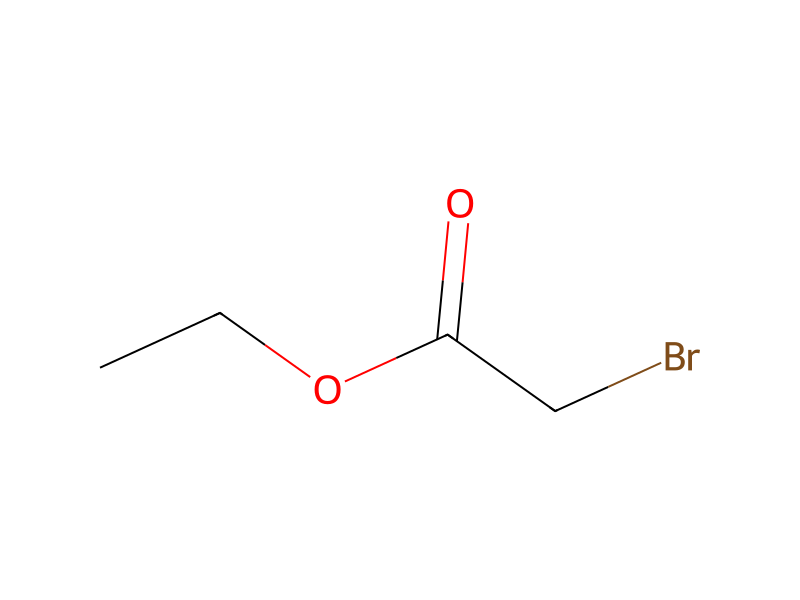
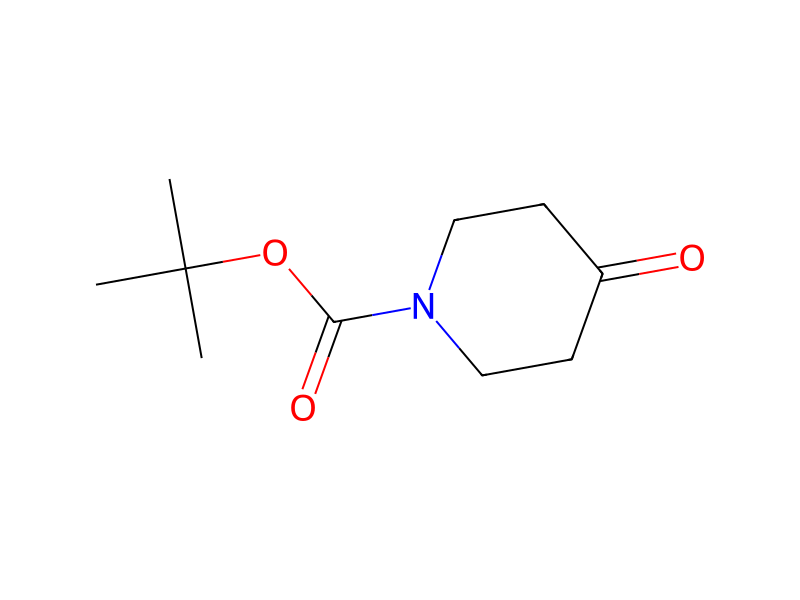
Iodine (12.7 g) was added to the suspension of zinc dust (20 g) in dry THF (200 ml) under nitrogen. An exothermic reaction takes place within 2 minutes and iodine disappeared in less the 10 minutes (a cold water bath is ready to cool the reaction down, but not used). To above mixture was then added by syringe a solution of mixture of ethyl bromoacetate (10.9 g) and N-Boc-4-piperidinone (10 g) in THF (50 ml) on the speed to maintain the reaction at gentle reflux. After stirring for 2 more hours, this mixture was then poured to the mixture of aqueous sodium bicarbonate (200 ml) and ethyl acetate (500 ml). Organic layer was seperated, washed with brine (200 ml), dried over sodium sulphate, solvent removed, the residue was columned on silica gel using heptane:EtOAc (10:1) as eluant to give expected product as a colourless oil (13.1 g). 1H NMR (CDCl3) δ: 4.18 (q, 2H), 3.80 (br, 2H), 3.57 (s, 1H), 3.22 (t, br, 2H), 2.46 (s, 2H), 1.67 (m, 2H), 1.47 (m, 2H), 1.46 (s, 9H), 1.28 (t, 3H).