Cyclopentanepropanol → Cyclopentanepropanal
Reaction equation

[CH:1]1([CH2:6][CH2:7][CH2:8][OH:9])[CH2:5][CH2:4][CH2:3][CH2:2]1.[Cr](Cl)([O-])(=O)=O.[NH+]1C=CC=CC=1.[Mn]([O-])(=O)(=O)=O.[K+]>ClCCl>[CH:1]1([CH2:6][CH2:7][CH:8]=[O:9])[CH2:5][CH2:4][CH2:3][CH2:2]1Participants
5
Reactant 3

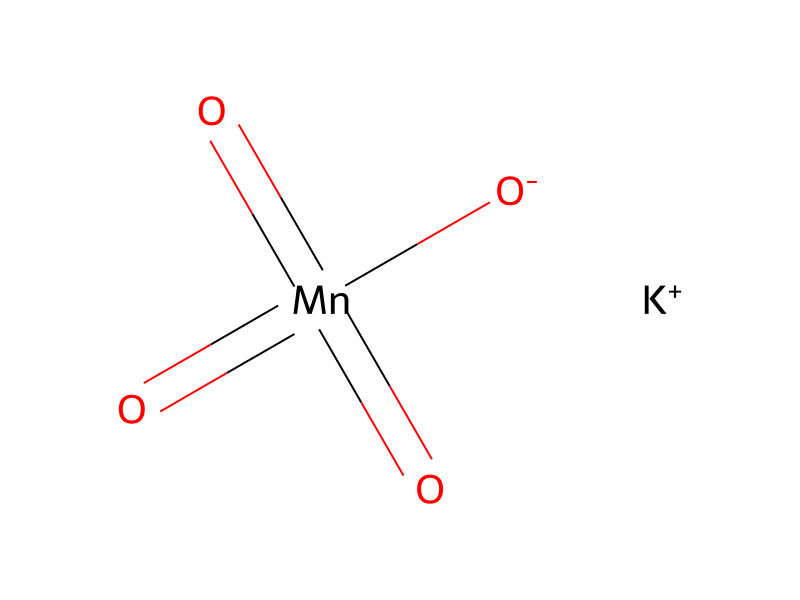

Product 1

Reagents, catalysts & solvents 1

Procedure
3-Cyclopentyl-1-propanol (15.0 g, 117 mmol) was dissolved in dichloromethane (600 mL) and treated with Celite (50 g) and pyridinium chlorochromate (50.0 g, 232 mmol). The reaction was stirred at room temperature for 24 hours. The reaction was found to be complete by thin layer chromatography (stain: potassium permanganate) and filtered through a pad of silica (dichloromethane) to afford 3-cyclopentyl-propionaldehyde as an oil (10.3 g, 70%). 1H NMR (CDCl3, 300 MHz) δ 11.1-10.8 (br s, 1 H), 2.36 (t, 7.73 Hz, 2 H), 1.8-1.5 (m, 9 H), 1.09 (m, 2 H).
Workup
- filtrationfiltered through a pad of silica (dichloromethane)
Sources & evidence
- ORD record
- ord-6ead7758382c4f53b1e7e5615b09b730
- Source dataset
- uspto-grants-2000_04
- Patent number
- US06051586
Reaction notes
Loading…