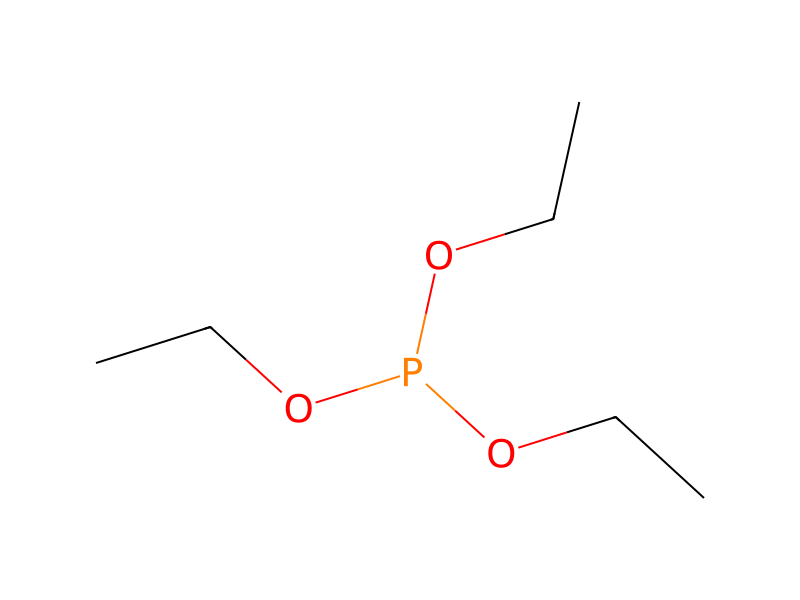
Triethyl phosphite → HCID 18791143, compound
Reaction equation

C([C:3](Br)(CC)[CH2:4][CH:5]([C:12]1[CH:17]=[CH:16][CH:15]=[CH:14][CH:13]=1)[C:6]1[CH:11]=[CH:10][CH:9]=[CH:8][CH:7]=1)C.[P:21]([O:28]CC)([O:25][CH2:26][CH3:27])[O:22][CH2:23][CH3:24]>>[C:12]1([CH:5]([C:6]2[CH:7]=[CH:8][CH:9]=[CH:10][CH:11]=2)[CH2:4][CH2:3][P:21](=[O:28])([O:25][CH2:26][CH3:27])[O:22][CH2:23][CH3:24])[CH:13]=[CH:14][CH:15]=[CH:16][CH:17]=1Participants
3


Procedure
Diethyl 3,3-diphenylpropylbromide (43.0 g, 0.156 mol) and triethyl phosphite (51.9 g, 0.31 mol) was heated to 150° C. for 20 hours in a flask equipped with nitrogen flow through and an air condenser. Extra triethyl phosphite (20 ml) was added and heating continued to 160° C. for 3 hours. The yellow reaction solution was distilled, collecting several fractions to give the title product as a pale yellow liquid (b.p. 162-176° C. at 0.08 mbar) that crystallised on standing.
Workup
- customequipped with nitrogen flow through and an air condenser
- temperatureheating
- distillationThe yellow reaction solution was distilled
- customcollecting several fractions
Sources & evidence
- ORD record
- ord-f50c178856e141e99dc5b4a6bb7c38af
- Source dataset
- uspto-grants-2000_04
- Patent number
- US06054448
Reaction notes
Loading…