Ammonium Hydroxide → Ethyl 2-(3-bromo-6-methyl-2-oxopyrazin-1(2H)-yl)acetate
Reaction equation

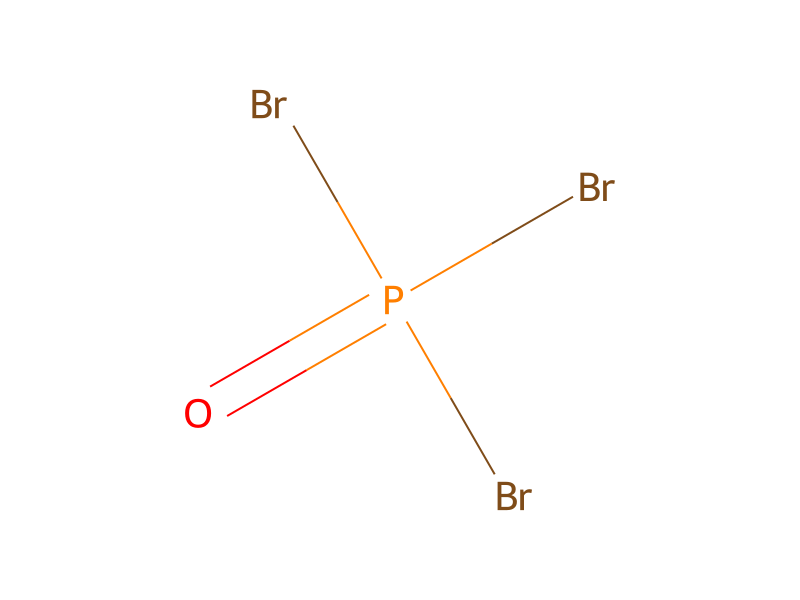
[CH2:1]([O:3][C:4]([CH2:6][N:7]1[C:12]([CH3:13])=[CH:11][N:10]=[C:9](O)[C:8]1=[O:15])=[O:5])[CH3:2].P(Br)(Br)([Br:18])=O.[OH-].[NH4+]>C(Cl)(Cl)Cl.ClCCl>[Br:18][C:9]1[C:8](=[O:15])[N:7]([CH2:6][C:4]([O:3][CH2:1][CH3:2])=[O:5])[C:12]([CH3:13])=[CH:11][N:10]=1Participants





Conditions
- Temperature
- 50 °C
Procedure
A slurry of 1-(ethoxycarbonylmethyl)-3-hydroxy-6-methylpyrazinone (4.24 g, 20 mmol), as prepared in the preceding step, and phosphorous oxybromide (6.3 g, 22 mmol) in chloroform (15 mL) was stirred at 50° C. under nitrogen for 2 hours, then allowed to cool to room temperature overnight. The reaction mixture was diluted with dichloromethane and ice-water, basified with ammonium hydroxide, and extracted with dichloromethane. The combined organic layers were washed with brine, dried over Na2SO4, treated with activated carbon, filtered and concentrated. The solid was collected, washed with 15% ethyl acetate in hexane, and dried under high vacuum to give the title compound as an orange colored solid (5.1 g, 93%). 1H NMR (400 MHz, CDCl3) δ 7.06 (s, 1H), 4.77 (s, 2H), 4.26 (q, 2 H, J=7.1 Hz), 2.24 (s, 3H), 1.31 (t, 3H, J=7.1 Hz).
Workup
- temperatureto cool to room temperature overnight
- extractionextracted with dichloromethane
- washThe combined organic layers were washed with brine
- dry with materialdried over Na2SO4
- additiontreated with activated carbon
- filtrationfiltered
- concentrationconcentrated
- customThe solid was collected
- washwashed with 15% ethyl acetate in hexane
- customdried under high vacuum
Sources & evidence
- ORD record
- ord-3598301550ae497b9ea99e3db5b41215
- Source dataset
- uspto-grants-2002_11
- Patent number
- US06476016B2
Reaction notes
Loading…