Malonic Acid → HCID 2749419, compound
Reaction equation

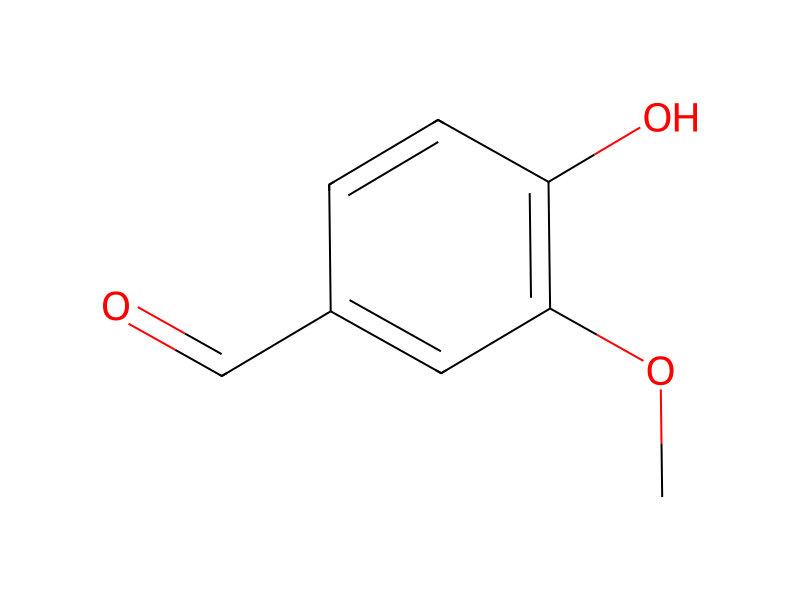
[OH:1][C:2]1C=C[C:5]([CH:6]=O)=[CH:4][C:3]=1OC.C(O)(=O)CC(O)=O.Br[CH:20]([CH3:32])[CH2:21][C:22]1[CH:27]=[C:26](OC)[C:25](OC)=[CH:24][CH:23]=1.C1(P(C2C=CC=CC=2)C2C=CC=CC=2)C=CC=CC=1.N1CCCCC1>C([O-])(=O)C.[Pd+2].C([O-])(=O)C.CN(C=O)C>[OH:1][C:2]1[CH:3]=[CH:4][CH:5]=[CH:6][C:32]=1[CH:20]=[CH:21][C:22]1[CH:23]=[CH:24][CH:25]=[CH:26][CH:27]=1Participants
Reactant 5




Product 1

Reagents, catalysts & solvents 2


Procedure
A mixture of 4-hydroxy-3-methoxybenzaldehyde (3.47 mmol), malonic acid (13.8 mmol), 2-bromo-4,5-dimethoxypropylbenzene (1.93 mmol), palladium acetate (0.09 mmol), triphenylphosphine (0.14 mmol), piperidine (15.8 mmol) and DMF (20 ml) were taken in a 100 ml round bottom flask fitted with a condenser. The flask was shaken well and placed inside the monomode microwave oven and irradiated (250 W, 160° C.) for 30 minutes in parts. After completion the reaction was worked up as in example I and provided a white crystalline solid; 25% yield (m.p. 74-78° C.); 1H NMR (300 MHz, CDCl3) δ 7.11-6.93 (4H, m), 6.86 (1H, d), 6.78 (1H, d), 6.61 (1H, s), 5.62 (1H, s), 3.88 (3H, s), 3.86 (3H, s), 3.78 (3H, s), 2.61 (2H, t), 1.55 (2H, m), 0.91 (31-1, t): δC (75.4 MHz, CDCl3) δC 148.4, 147.3, 146.7, 145.3, 133.2, 130.7, 128.3, 127.9, 124.2, 119.8, 114.6, 112.8, 108.6, 108.5, 56.0, 35.1, 24.7 and 14.0. The above obtained hydroxystilbene derivative was alkylated or acetylated/benzoylated in the same pot with addition of alkyl halide or acetyl chloride or benzoyl chloride etc.
Workup
- customwere taken in a 100 ml round bottom flask
- customfitted with a condenser
- customirradiated (250 W, 160° C.) for 30 minutes in parts
- customprovided a white crystalline solid
Sources & evidence
- ORD record
- ord-045895da261a455195b29436b6f20fee
- Source dataset
- uspto-grants-2014_05
- Patent number
- US08716532B2
Reaction notes
Loading…