5-Bromo-2-nitropyridine → tert-butyl (3S)-3-methyl-4-(6-nitropyridin-3-yl)piperazine-1-carboxylate
Reaction equation

[N+:1]([C:4]1[N:9]=[CH:8][C:7]([N:10]2[CH2:15][CH2:14][N:13]([C:16]([O:18][C:19]([CH3:22])([CH3:21])[CH3:20])=[O:17])[CH2:12][CH2:11]2)=[CH:6][CH:5]=1)([O-:3])=[O:2].[CH3:23][C@@H]1NCCN(C(OC(C)(C)C)=O)C1.BrC1C=CC([N+]([O-])=O)=NC=1>>[CH3:23][C@@H:15]1[N:10]([C:7]2[CH:8]=[N:9][C:4]([N+:1]([O-:3])=[O:2])=[CH:5][CH:6]=2)[CH2:11][CH2:12][N:13]([C:16]([O:18][C:19]([CH3:22])([CH3:21])[CH3:20])=[O:17])[CH2:14]1Participants
4
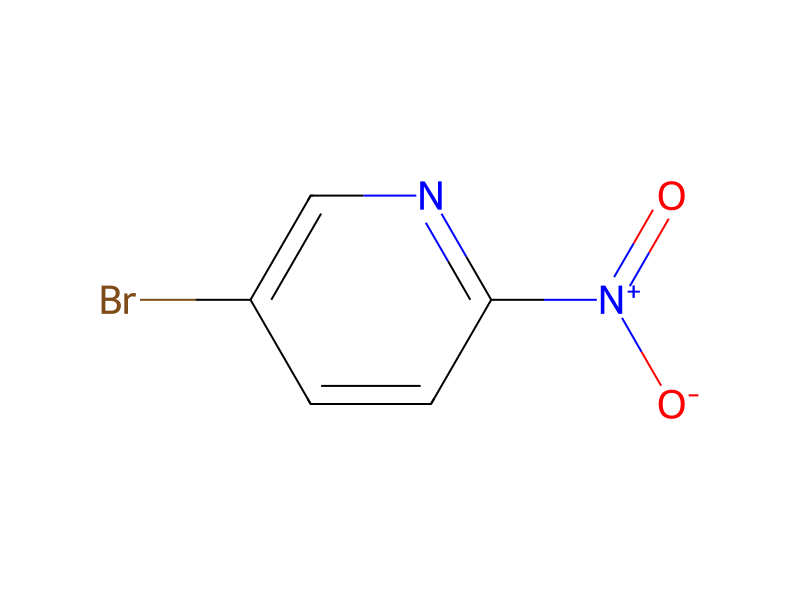


Procedure
Following the procedure described for compound 101g and starting with (3S)-tert-butyl 3-methylpiperazine-1-carboxylate (10.0 g, 50 mmol) and 5-bromo-2-nitropyridine (10.5 g, 50 mmol) afforded 191e as a yellow solid (8.05 g, 50%). MS-ESI: [M+H]+ 323
Sources & evidence
- ORD record
- ord-75f9f6c461114482960fe95b01dd2cb0
- Source dataset
- uspto-grants-2014_05
- Patent number
- US08716274B2
Reaction notes
Loading…