Water → 1H-Pyrrolo[2,3-B]pyridine-3-carboxaldehyde, 5-chloro-1-(phenylsulfonyl)-
Reaction equation

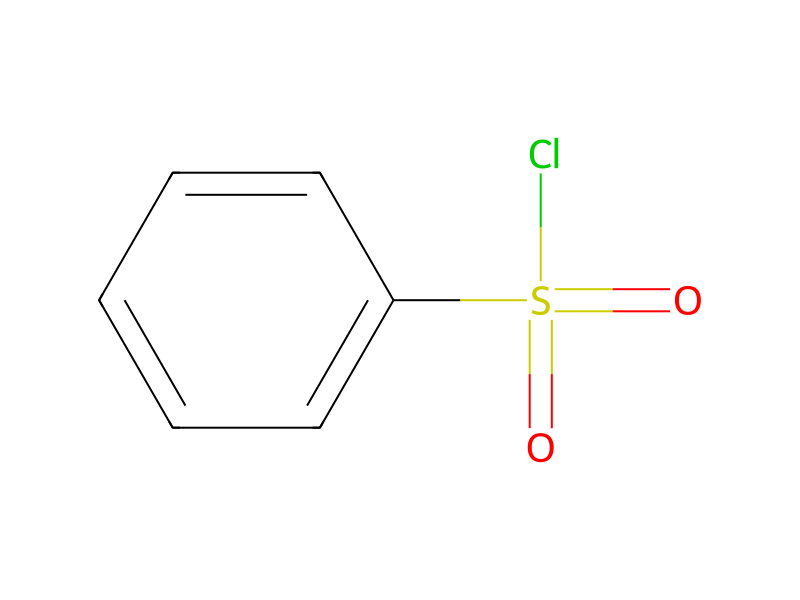
[Cl:1][C:2]1[CH:3]=[C:4]2[C:10]([CH:11]=[O:12])=[CH:9][NH:8][C:5]2=[N:6][CH:7]=1.[OH-].[K+].[C:15]1([S:21](Cl)(=[O:23])=[O:22])[CH:20]=[CH:19][CH:18]=[CH:17][CH:16]=1.O>ClCCl.S([O-])(O)(=O)=O.C([N+](CCCC)(CCCC)CCCC)CCC>[C:15]1([S:21]([N:8]2[C:5]3=[N:6][CH:7]=[C:2]([Cl:1])[CH:3]=[C:4]3[C:10]([CH:11]=[O:12])=[CH:9]2)(=[O:23])=[O:22])[CH:20]=[CH:19][CH:18]=[CH:17][CH:16]=1Participants
7
Reactant 4



Product 1

Reagents, catalysts & solvents 2


Procedure
To 5-chloro-1H-pyrrolo[2,3-b]pyridine-3-carbaldehyde (596, 3.60 g, 0.0199 mol) in dichloromethane (100 mL) were added a solution of potassium hydroxide (9M in water, 50 mL), tetrabutylammonium hydrogen sulfate (400 mg, 0.001 mol) and benzenesulfonyl chloride (2.9 mL, 0.023 mol). The reaction was stirred at room temperature for 3 hours, then poured into water and extracted with ethyl acetate. The organic layer was dried over anhydrous sodium sulfate and filtered. The filtrate was concentrated and washed with ethyl acetate to give a white solid (597, 2.3 g, 36.0%).
Workup
- extractionextracted with ethyl acetate
- dry with materialThe organic layer was dried over anhydrous sodium sulfate
- filtrationfiltered
- concentrationThe filtrate was concentrated
- washwashed with ethyl acetate
- customto give a white solid (597, 2.3 g, 36.0%)
Sources & evidence
- ORD record
- ord-99b3596b5b00412abe81a0bf4e737ce0
- Source dataset
- uspto-grants-2014_05
- Patent number
- US08722702B2
Reaction notes
Loading…