Cyclopropanecarbonitrile → HCID 86762433, compound
Reaction equation

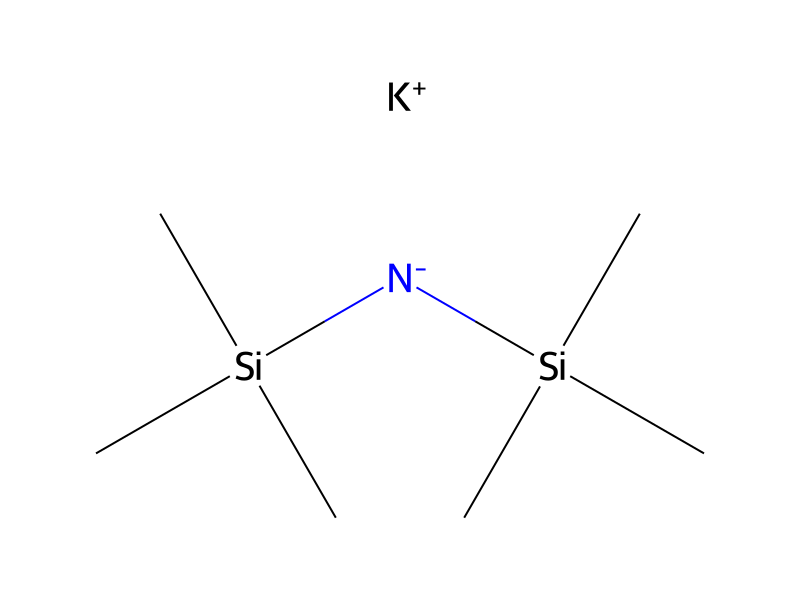
[Cl:1][C:2]1[CH:3]=[C:4]([F:9])[C:5](F)=[N:6][CH:7]=1.[CH:10]1([C:13]#[N:14])[CH2:12][CH2:11]1.C[Si]([N-][Si](C)(C)C)(C)C.[K+]>C1(C)C=CC=CC=1>[Cl:1][C:2]1[CH:3]=[C:4]([F:9])[C:5]([C:10]2([C:13]#[N:14])[CH2:12][CH2:11]2)=[N:6][CH:7]=1Participants
Reactant 3


Product 1

Reagents, catalysts & solvents 1

Conditions
- Temperature
- -5 °C
Procedure
Under an atmosphere of argon, 5-chloro-2,3-difluoropyridine (6 g, 4.17 ml, 40.1 mmol, Eq: 1.00) was combined with toluene (60.0 ml). Then cyclopropanecarbonitrile (2.69 g, 3.02 ml, 40.1 mmol, Eq: 1.00) was added to the solution. At −5° C., potassium bis(trimethylsilyl)amide (80.3 ml, 40.1 mmol, Eq: 1.00) was added dropwise over 30 min. The dark brown reaction was stirred for 1 hour at −5° C., and then for 2 h at room temperature. The reaction mixture was poured into satd. NH4Cl solution (50 ml) and extracted with 2×100 ml ethyl acetate. The organic layer was dried over Na2SO4, filtered and concentrated in vacuo. The crude material was purified by flash chromatography (70 g column, from 100% to 50% heptane in ethyl acetate). The title compound was obtained as a orange oil (1.55 g, 13.8%, MS (m/e)=197.2 [M+H+].
Workup
- customThe dark brown reaction
- waitfor 2 h at room temperature
- additionThe reaction mixture was poured into satd
- extractionNH4Cl solution (50 ml) and extracted with 2×100 ml ethyl acetate
- dry with materialThe organic layer was dried over Na2SO4
- filtrationfiltered
- concentrationconcentrated in vacuo
- customThe crude material was purified by flash chromatography (70 g column, from 100% to 50% heptane in ethyl acetate)
Sources & evidence
- ORD record
- ord-394fc234d78545b089df535ce20979e3
- Source dataset
- uspto-grants-2014_05
- Patent number
- US08729061B2
Reaction notes
Loading…