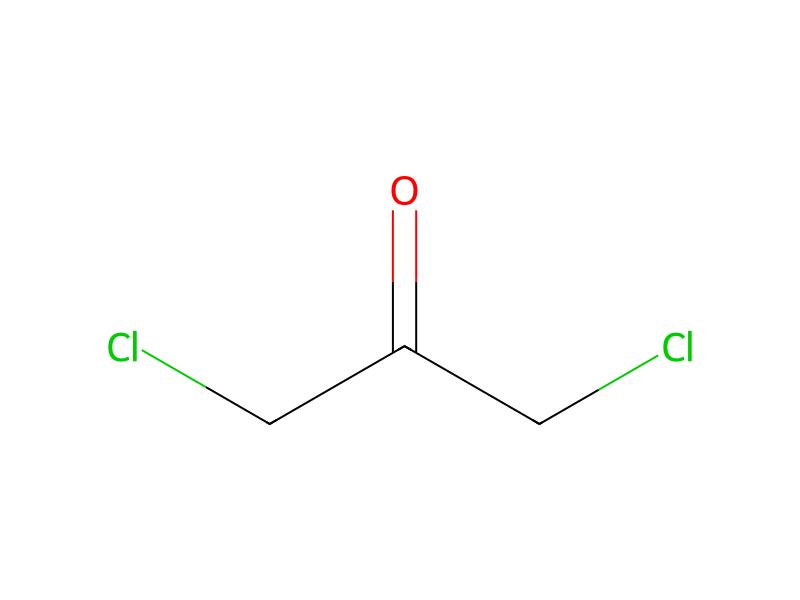
1,3-Dichloroacetone → 4-(ChloroMethyl)-2-cyclopropyloxazole
Reaction equation

[CH:1]1([C:4]([NH2:6])=[O:5])[CH2:3][CH2:2]1.[Cl:7][CH2:8][C:9](=O)[CH2:10]Cl>O>[Cl:7][CH2:8][C:9]1[N:6]=[C:4]([CH:1]2[CH2:3][CH2:2]2)[O:5][CH:10]=1Participants
4
Reactant 2

Product 1

Reagents, catalysts & solvents 1

Conditions
- Temperature
- 110 °C
Procedure
A mixture of cyclopropanecarboxylic acid amide (5.0 g, 58.74 mmol) and 1,3-dichloro-propan-2-one (14.92 g, 117.49 mmol) was heated at 110° C. for 4 h. The mixture was cooled to room temperature and water (75 mL) was added and the mixture was extracted with dichloromethane (3×50 mL). The organic layer was dried over anhydrous sodium sulphate and evaporated in vacuo to get crude residue. After purification via column chromatography (100-200 silica gel, elution with 2% EtOAc in hexane), 4 g of 4-chloromethyl-2-cyclopropyl-oxazole was obtained as a dark brown liquid, 158.0 (M+H)+. But it contained impurities. This compound was used for the next step as such.
Workup
- temperatureThe mixture was cooled to room temperature
- extractionthe mixture was extracted with dichloromethane (3×50 mL)
- dry with materialThe organic layer was dried over anhydrous sodium sulphate
- customevaporated in vacuo
- customto get crude residue
- customAfter purification
- washvia column chromatography (100-200 silica gel, elution with 2% EtOAc in hexane)
Sources & evidence
- ORD record
- ord-7f32b25d66db48d4ae4be88900cd39c2
- Source dataset
- uspto-grants-2014_05
- Patent number
- US08729105B2
Reaction notes
Loading…