Phthalic Acid → Phthalic Anhydride
Reaction equation

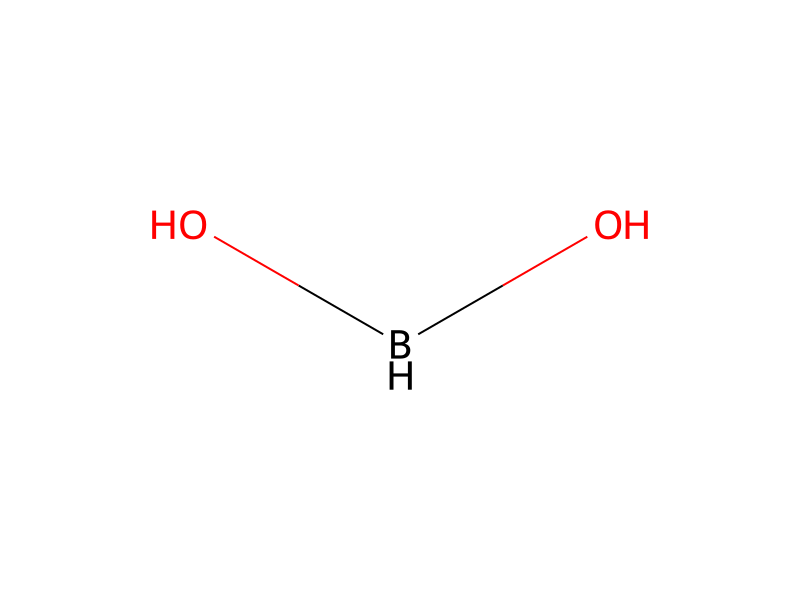
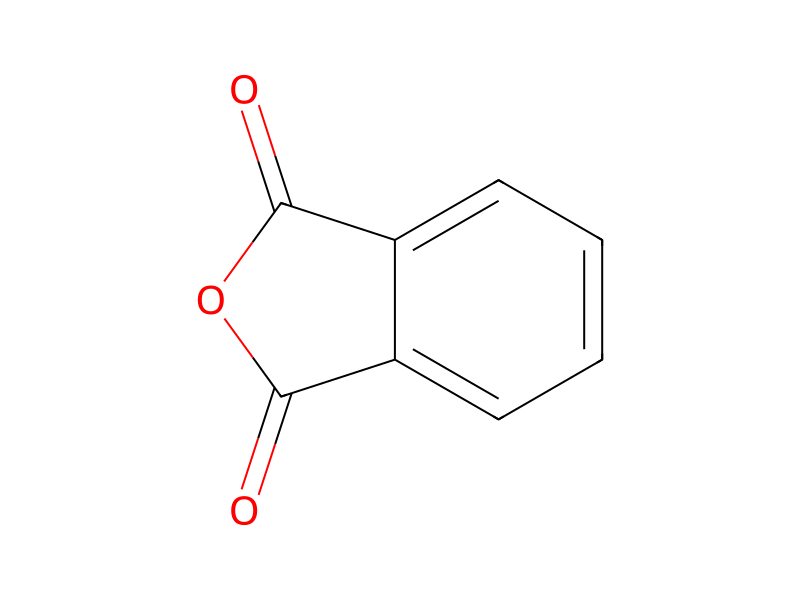
[C:1]([OH:12])(=[O:11])[C:2]1[C:3](=[CH:7][CH:8]=[CH:9][CH:10]=1)[C:4]([OH:6])=O.C(N(CC1C=CC=C(CN(C(C)C)C(C)C)C=1B(O)O)C(C)C)(C)C.B(O)O>CCCCCCC>[C:4]1(=[O:6])[O:12][C:1](=[O:11])[C:2]2=[CH:10][CH:9]=[CH:8][CH:7]=[C:3]12Participants
Reactant 3


Product 1
Reagents, catalysts & solvents 1

Procedure
Phthalic acid (2.5 mmol), 2,6-bis(diisopropylaminomethyl)phenylboronic acid (hereinafter, referred to as “boronic acid compound A”, 0.25 mol) as an arylboronic acid catalyst, and heptane (10 mL) as a solvent were added in a flask having a volume of 20 mL, and a column (small Soxhlet extractor) filled with dried molecular sieves 3A (approximately 3 g) was fitted to the flask. The mixture was heated for 12 hours under azeotropic reflux conditions with the removal of water. After the reaction mixture was cooled to room temperature, heptane was evaporated under reduced pressure. The crude product of phthalic anhydride thus obtained was analyzed by 1H NMR (CDCl3), and the yield thereof was calculated. When the same procedure was repeatedly performed a plurality of times, the yield was 72% to 81%.
Workup
- additionwere added in a flask
- additiona column (small Soxhlet extractor) filled
- dry with materialwith dried molecular sieves 3A (approximately 3 g)
- customwas fitted to the flask
- temperatureThe mixture was heated for 12 hours
- temperatureunder azeotropic reflux conditions
- customwith the removal of water
- customheptane was evaporated under reduced pressure
Sources & evidence
- ORD record
- ord-a99e9a3fe9824723970a3666d22df5c0
- Source dataset
- uspto-grants-2014_05
- Patent number
- US08735582B2
Reaction notes
Loading…