Sodium Carbonate → 3,5-Dimethyl-2-(4-diphenylaminophenyl)pyrazine
Reaction equation

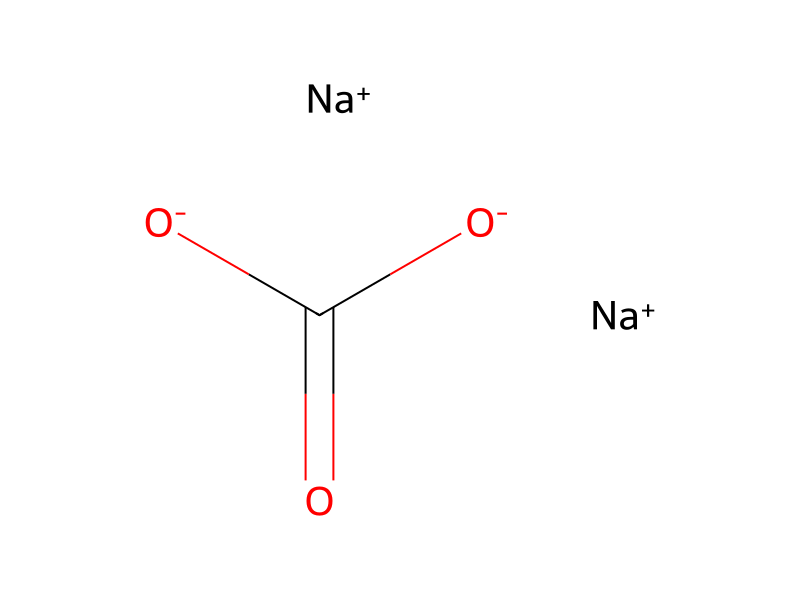
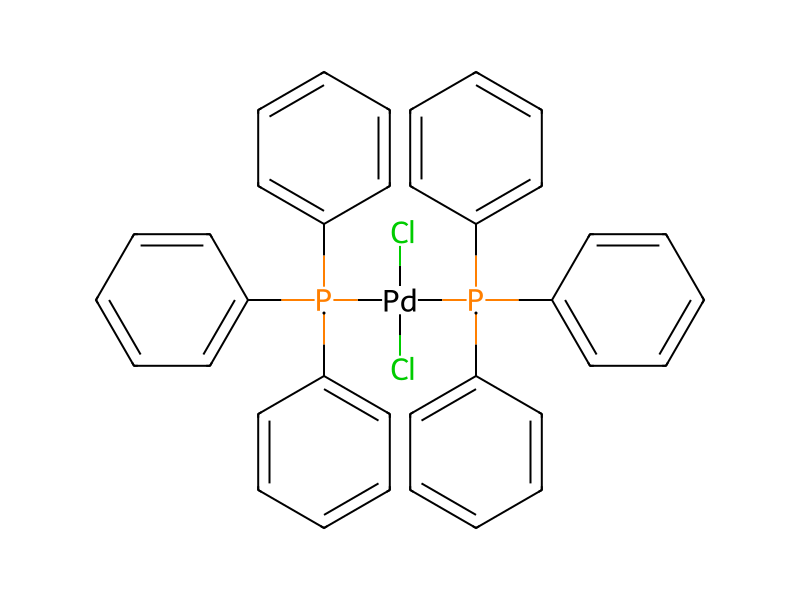
Cl[C:2]1[C:7]([CH3:8])=[N:6][C:5]([CH3:9])=[CH:4][N:3]=1.CC1(C)C(C)(C)OB([C:18]2[CH:23]=[CH:22][C:21]([N:24]([C:31]3[CH:36]=[CH:35][CH:34]=[CH:33][CH:32]=3)[C:25]3[CH:30]=[CH:29][CH:28]=[CH:27][CH:26]=3)=[CH:20][CH:19]=2)O1.C(=O)([O-])[O-].[Na+].[Na+]>Cl[Pd](Cl)([P](C1C=CC=CC=1)(C1C=CC=CC=1)C1C=CC=CC=1)[P](C1C=CC=CC=1)(C1C=CC=CC=1)C1C=CC=CC=1.O.C(#N)C>[CH3:8][C:7]1[C:2]([C:34]2[CH:33]=[CH:32][C:31]([N:24]([C:25]3[CH:30]=[CH:29][CH:28]=[CH:27][CH:26]=3)[C:21]3[CH:22]=[CH:23][CH:18]=[CH:19][CH:20]=3)=[CH:36][CH:35]=2)=[N:3][CH:4]=[C:5]([CH3:9])[N:6]=1Participants
Reactant 3


Product 1

Reagents, catalysts & solvents 3
Conditions
- Temperature
- 50 °C
Procedure
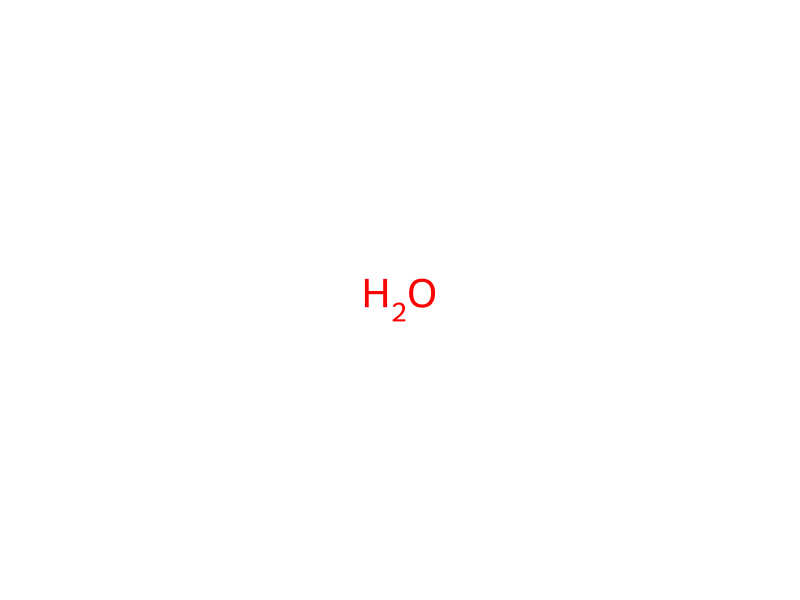
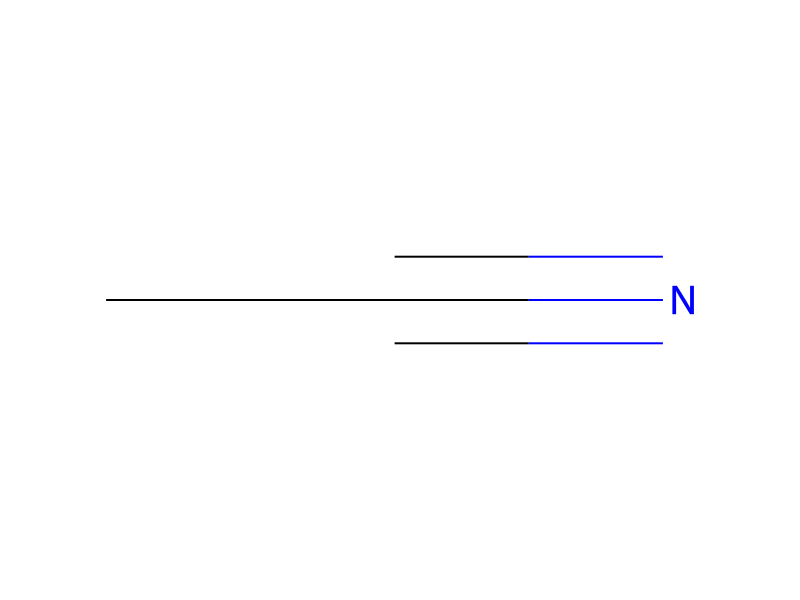
Next, there were put 0.36 g of 2-chloro-3,5-dimethylpyrazine, 0.92 g of 4,4,5,5-tetramethyl-2-(4-diphenylaminophenyl)-1,3,2-dioxaborolane obtained in Step 1, 0.26 g of sodium carbonate, 0.011 g of bis(triphenylphosphine)palladium(II) dichloride (abbreviation: Pd(PPh3)2Cl2), 10 mL of water, and 10 mL of acetonitrile in a recovery flask equipped with a reflux pipe. The air in the flask was replaced by argon. This reaction container was heated by microwave irradiation (2.45 GHz, 100 W) for 20 minutes. After that, the reaction container was cooled to 50° C. or lower, water was added to the reaction solution, and the organic layer was subjected to extraction with dichloromethane. The obtained organic layer was washed with water and dried with magnesium sulfate. After the drying, the solution was filtered. The solvent of this solution was distilled, and the obtained residue was purified by silica gel column chromatography using a mixed solvent of dichloromethane and ethyl acetate as a developing solvent, thereby obtaining the objective pyrazine derivative Hdmdpappr (white powder, 30% yield). Note that the microwave irradiation was performed using a microwave synthesis system (Discover, produced by CEM Corporation). The synthesis scheme of Step 2 is shown by (b-2).
Workup
- customequipped with a reflux pipe
- temperatureThis reaction container was heated by microwave irradiation (2.45 GHz, 100 W) for 20 minutes
- extractionthe organic layer was subjected to extraction with dichloromethane
- washThe obtained organic layer was washed with water
- dry with materialdried with magnesium sulfate
- filtrationAfter the drying, the solution was filtered
- distillationThe solvent of this solution was distilled
- customthe obtained residue was purified by silica gel column chromatography
Sources & evidence
- ORD record
- ord-3a6140d3fe854b9198a2aff6441ddd64
- Source dataset
- uspto-grants-2014_05
- Patent number
- US08735581B2
Reaction notes
Loading…