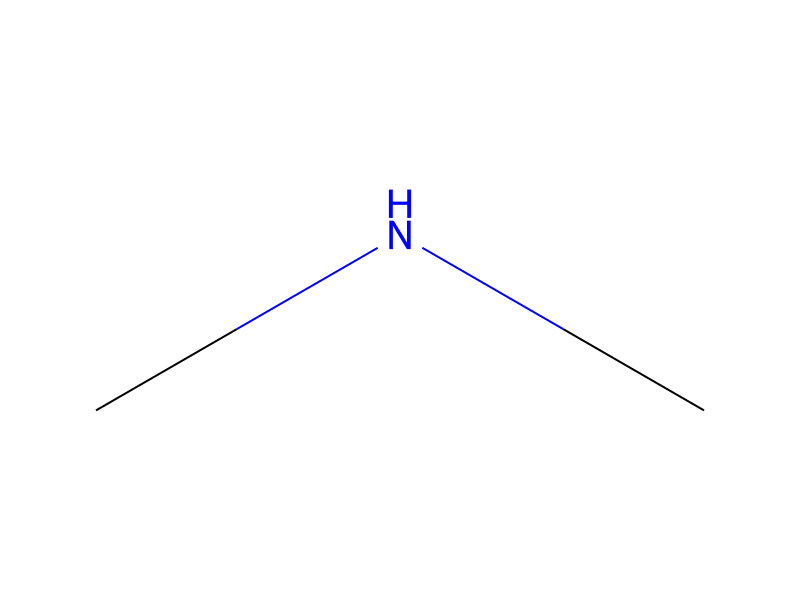
Dimethylamine → UV-328
Reaction equation

[OH:1][C:2]1[C:7]([C:8]([CH2:11][CH3:12])([CH3:10])[CH3:9])=[CH:6][C:5]([C:13]([CH2:16][CH3:17])([CH3:15])[CH3:14])=[CH:4][C:3]=1[N:18]1[N+:22]([O-])=[C:21]2[CH:24]=[CH:25][CH:26]=[CH:27][C:20]2=[N:19]1.CNC.[H][H]>C1(C)C=CC=CC=1.[C].[Pd]>[OH:1][C:2]1[C:7]([C:8]([CH2:11][CH3:12])([CH3:10])[CH3:9])=[CH:6][C:5]([C:13]([CH2:16][CH3:17])([CH3:15])[CH3:14])=[CH:4][C:3]=1[N:18]1[N:22]=[C:21]2[CH:24]=[CH:25][CH:26]=[CH:27][C:20]2=[N:19]1Participants





Procedure
36.7 g (0.1 mol) of 2-(2'-hydroxy-3',5'-di-t-amylphenyl)benzotriazole-N-oxide, 0.125 g of 5% palladium carbon, 150 ml of a toluene solvent and 7 g of 50% dimethylamine were charged into a 500-ml four neck flask. After the air in the flask had been replaced by nitrogen, the resultant mixture was agitated at room temperature. Hydrogen was then supplemented to allow for the amount of hydrogen absorbed by the mixture, which was then subjected to reaction until no more hydrogen was absorbed by it. After the reaction had been completed, the catalyst was filtered off, and part of the filtrate was subjected to quantitative analysis using gas chromatography (GC). The results revealed a yield of 93% of 2-(2'-hydroxy-3',5'-di-t-amylphenyl)benzotriazole. The solvent was then distilled off from the filtrate, and the residual solid was crystallized using ethanol and then washed with ethanol to obtain 28.1 g of 2-(2'-hydroxy-3',5'-di-t-amylphenyl)benzotriazole (yield, 80%; melting point, 79° to 81° C.).
Workup
- customabsorbed by the mixture, which
- customwas then subjected to reaction until no more hydrogen
- customwas absorbed by it
- filtrationthe catalyst was filtered off
Sources & evidence
- ORD record
- ord-26b60e79536d4bc29ce2ec895247c0e0
- Source dataset
- uspto-grants-1992_04
- Patent number
- US05104992
Reaction notes
Loading…