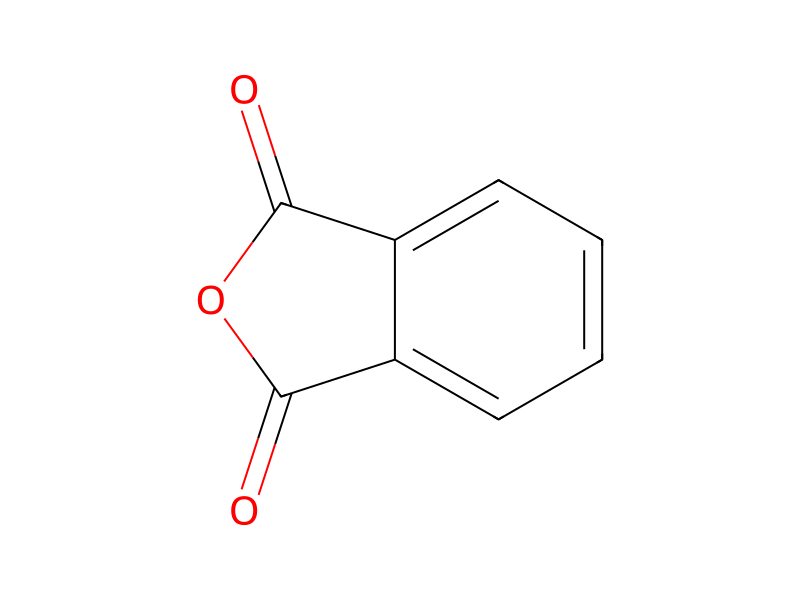
Phthalic Anhydride → 2-(4-Neopentylbenzoyl)-benzoic acid
Reaction equation
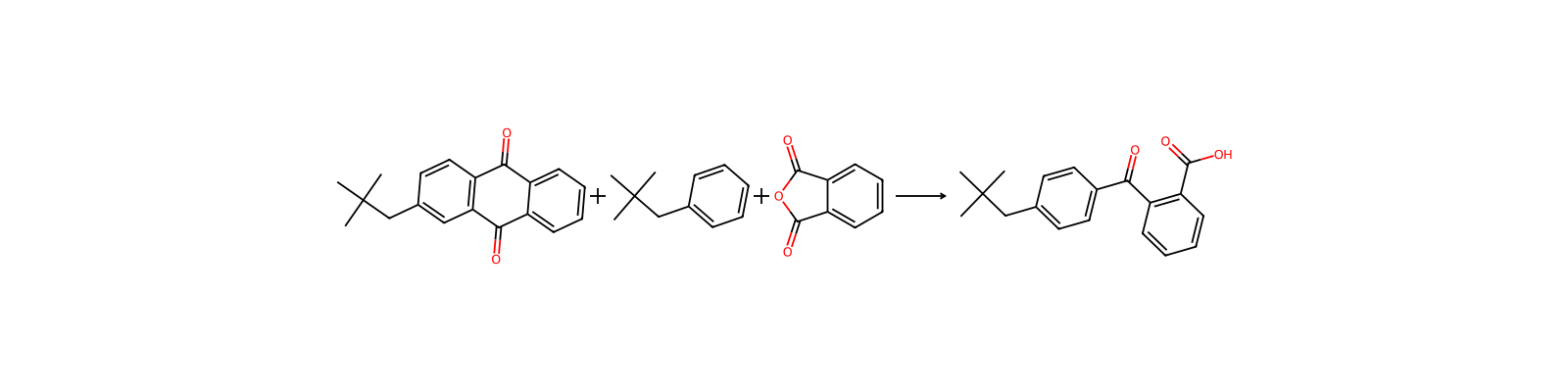
[CH2:1]([C:6]1[CH:19]=[CH:18][C:17]2[C:16](=[O:20])[C:15]3[C:10](=[CH:11][CH:12]=[CH:13][CH:14]=3)[C:9](=[O:21])[C:8]=2[CH:7]=1)[C:2]([CH3:5])([CH3:4])[CH3:3].C(C1C=CC=CC=1)C(C)(C)C.C1(=O)OC(=[O:37])C2=CC=CC=C12>>[CH2:1]([C:6]1[CH:19]=[CH:18][C:17]([C:16]([C:15]2[CH:14]=[CH:13][CH:12]=[CH:11][C:10]=2[C:9]([OH:21])=[O:37])=[O:20])=[CH:8][CH:7]=1)[C:2]([CH3:3])([CH3:4])[CH3:5]Participants
4


Procedure
We have found that this object is achieved by the novel compound 2-neopentylanthraquinone of the formula ##STR2## Furthermore, we have found a process for the preparation of 2-neopentylanthraquinone, wherein neopentylbenzene is acylated with phthalic anhydride by a Friedel-Crafts reaction to give 2-(4-neopentylbenzoyl)-benzoic acid and the latter is cyclized in the presence of a strong anhydrous acid to give 2-neopentylanthraquinone. We have also found that 2-neopentylanthraquinone is a catalyst for the preparation of hydrogen peroxide.
Sources & evidence
- ORD record
- ord-9063a6f77acb4b9292fcc888c5ccee66
- Source dataset
- uspto-grants-1992_04
- Patent number
- US05107004
Reaction notes
Loading…