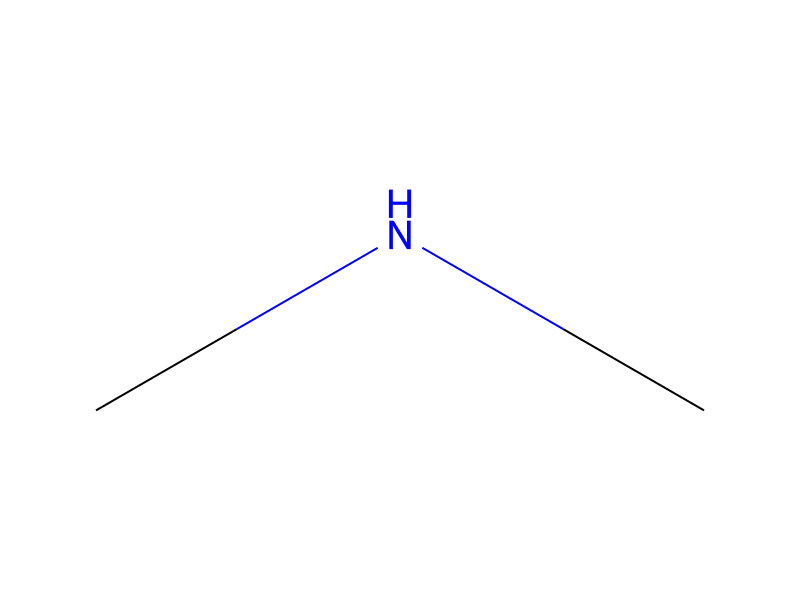
Dimethylamine → Urea, N,N-dimethyl-N'-(4-(4-morpholinyl)-6-propyl-1,3,5-triazin-2-yl)-
Reaction equation

[CH3:1][NH:2][CH3:3].[O:4]1[CH2:9][CH2:8][N:7]([C:10]2[N:15]=[C:14]([CH2:16][CH2:17][CH3:18])[N:13]=[C:12]([NH:19][C:20](=[O:28])OC3C=CC=CC=3)[N:11]=2)[CH2:6][CH2:5]1>ClCCl>[CH3:1][N:2]([CH3:3])[C:20]([NH:19][C:12]1[N:11]=[C:10]([N:7]2[CH2:6][CH2:5][O:4][CH2:9][CH2:8]2)[N:15]=[C:14]([CH2:16][CH2:17][CH3:18])[N:13]=1)=[O:28]Participants
4



Procedure
A gaseous stream of dimethylamine is passed through a solution of 5 g (0.0145 mole) of phenyl (4-morpholino-6-propyl-1,3,5-triazin-2-yl)carbamate (compound 28 prepared in example 3) in 100 ml of anhydrous dichloromethane for three hours at a temperature of 20° C. The mixture is then allowed to stand for 12 hours. It is washed successively with a dilute sodium hydroxide solution and with water. The organic phase is dried over sodium sulfate and the solvent is evaporated under reduced pressure. The residue obtained crystallizes in a 50:50mixture (v/v) of ethyl acetate-hexane. 1.7 g of N,N-dimethyl-N'-(4-morpholino-6-propyl-1,3,5-triazin-2-yl)-urea is obtained.
Workup
- washIt is washed successively with a dilute sodium hydroxide solution and with water
- dry with materialThe organic phase is dried over sodium sulfate
- customthe solvent is evaporated under reduced pressure
- customThe residue obtained
- customcrystallizes in a 50
Sources & evidence
- ORD record
- ord-396ee4fee11345e9b9e827a38565b605
- Source dataset
- uspto-grants-1990_09
- Patent number
- US04956367
Reaction notes
Loading…