Triethylamine → HCID 14054112, compound
Reaction equation

[CH3:1][C:2]1[O:3][CH:4]=[CH:5][C:6]=1[C:7]([OH:9])=O.S(Cl)(Cl)=O.C(N(CC)CC)C.[CH3:21][C:22]1([CH3:33])[C:30]2[CH:29]=[CH:28][CH:27]=[C:26]([NH2:31])[C:25]=2[CH:24]([CH3:32])[CH2:23]1>C(OCC)(=O)C>[CH3:1][C:2]1[O:3][CH:4]=[CH:5][C:6]=1[C:7]([NH:31][C:26]1[CH:27]=[CH:28][CH:29]=[C:30]2[C:25]=1[CH:24]([CH3:32])[CH2:23][C:22]2([CH3:33])[CH3:21])=[O:9]Participants
Reactant 4



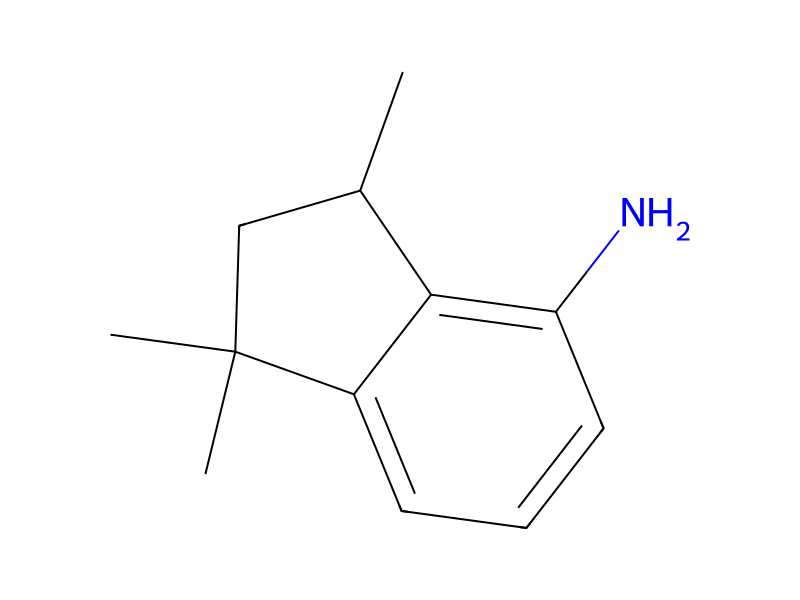
Product 1

Reagents, catalysts & solvents 1

Procedure
A mixture of 1.5 g (11.9 mmols) of 2-methyl-3furan carboxylic acid with 3 ml of thionyl chloride was refluxed for 1 hour. The reaction solution was distilled under reduced pressure to remove excess thionyl chloride. The obtained residue was cooled and 20 ml of ethyl acetate, 2 g (19.8 mmols) of triethylamine, and 1.8 g (10.3 mmols) of 1,1,3-trimethylindane-4-amine were added thereto. The resultant mixture was stirred at room temperature for 2 hours. The reaction solution was sequentially washed with water and brine. The organic layer consequently separated was dried with magnesium sulfate and then concentrated under reduced pressure. The concentrated residue was purified by being recrystallized with ethyl acetate/n-hexane, to obtain 1.8 g of white crystals (Compound No. 17 shown in Table 6). The yield was 65%.
Workup
- temperaturewas refluxed for 1 hour
- distillationThe reaction solution was distilled under reduced pressure
- customto remove excess thionyl chloride
- temperatureThe obtained residue was cooled
- washThe reaction solution was sequentially washed with water and brine
- customThe organic layer consequently separated
- dry with materialwas dried with magnesium sulfate
- concentrationconcentrated under reduced pressure
- customThe concentrated residue was purified
- customby being recrystallized with ethyl acetate/n-hexane
Sources & evidence
- ORD record
- ord-0db9be5c1470445cad7cb70be8e860da
- Source dataset
- uspto-grants-1990_09
- Patent number
- US04956375
Reaction notes
Loading…