Chlorotrimethylsilane → 1-[2-(Chroman-3-yl)ethyl]-4-trimethylsilyloxy-1,2,5,6-tetrahydropyridine
Reaction equation

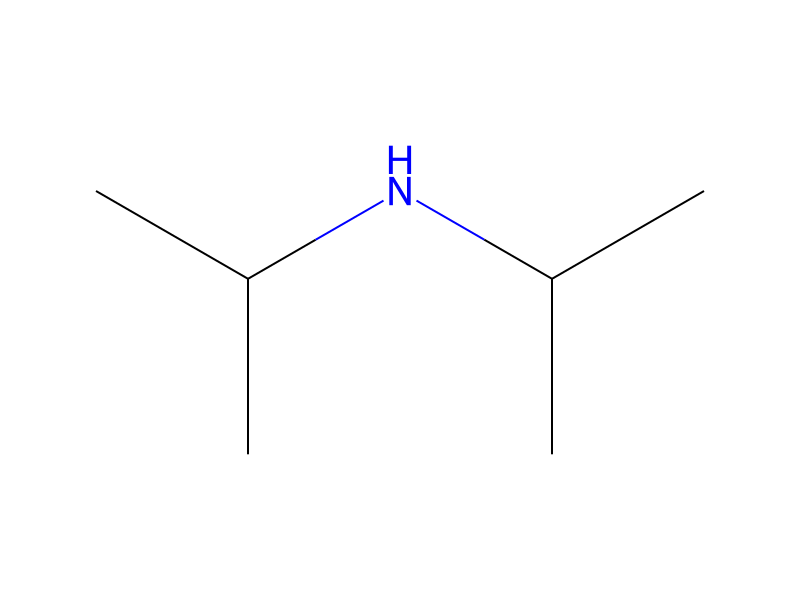
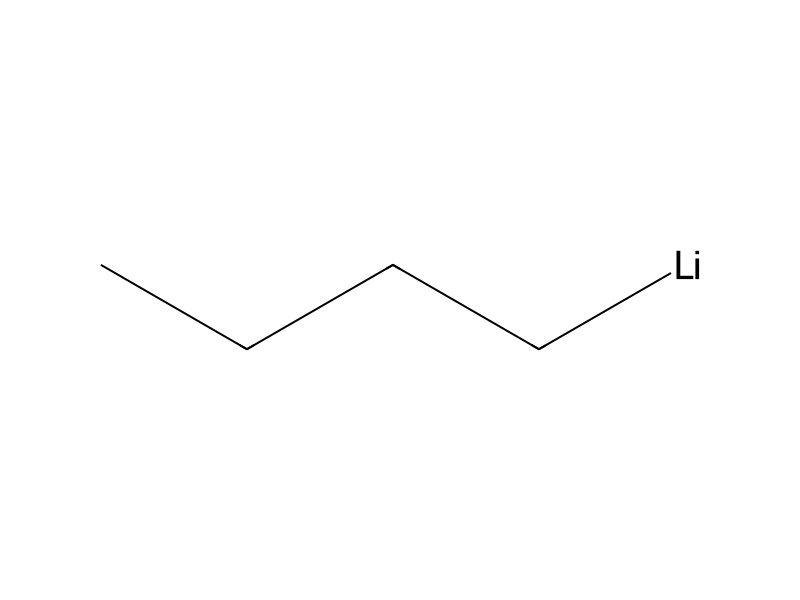
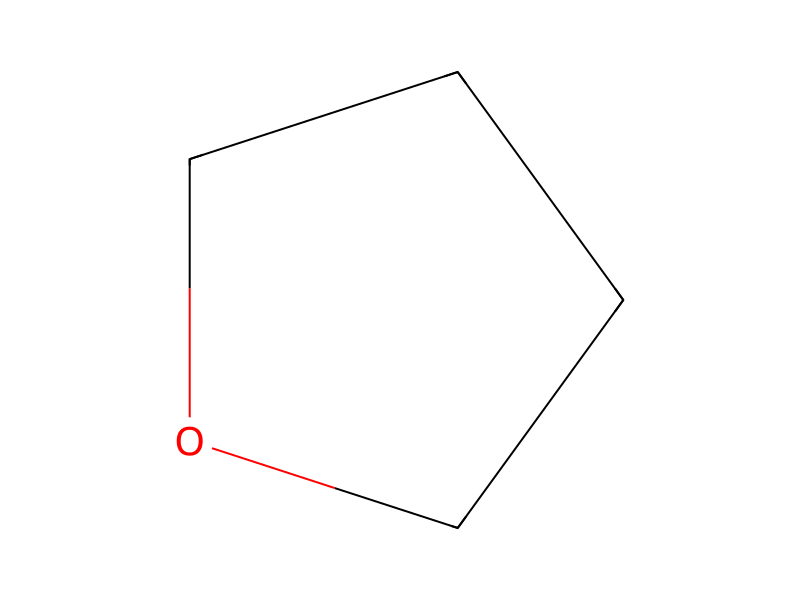
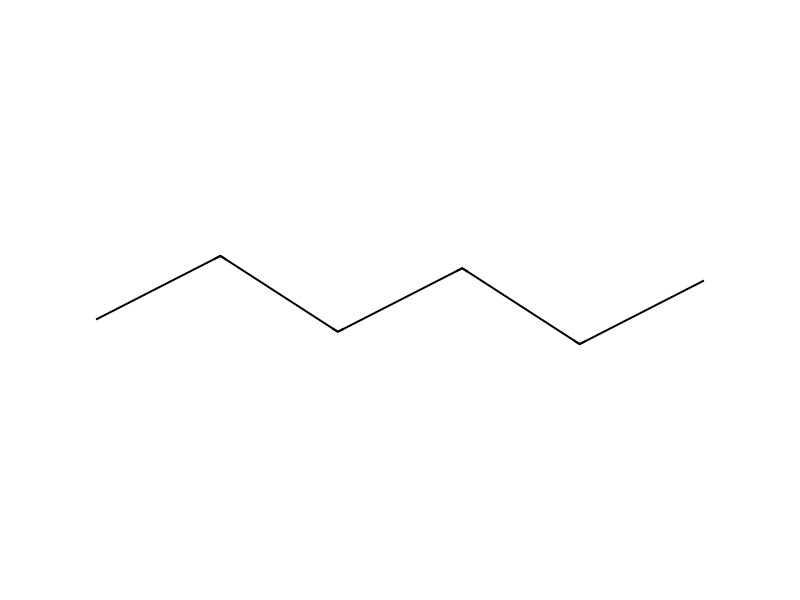
C([Li])CCC.C(NC(C)C)(C)C.[O:13]1[C:22]2[C:17](=[CH:18][CH:19]=[CH:20][CH:21]=2)[CH2:16][CH:15]([CH2:23][CH2:24][N:25]2[CH2:30][CH2:29][C:28](=[O:31])[CH2:27][CH2:26]2)[CH2:14]1.Cl[Si:33]([CH3:36])([CH3:35])[CH3:34]>CCCCCC.O1CCCC1>[O:13]1[C:22]2[C:17](=[CH:18][CH:19]=[CH:20][CH:21]=2)[CH2:16][CH:15]([CH2:23][CH2:24][N:25]2[CH2:26][CH2:27][C:28]([O:31][Si:33]([CH3:36])([CH3:35])[CH3:34])=[CH:29][CH2:30]2)[CH2:14]1Participants
Reactant 4


Product 1

Reagents, catalysts & solvents 2
Procedure
17.4 ml of n-butyllithium in hexane are added at 0°-5° to a solution of 2.81 g of diisopropylamine in 30 ml of dry tetrahydrofuran. The whole is stirred for 30 minutes at room temperature, then cooled to -15° and a solution of 6.24 g (25 mmol) of 1-[2-(chroman-3-yl)ethyl]-4-oxopiperidine in 30 ml of tetrahydrofuran is added. After 15 minutes, a solution of 3.05 g (28 mmol) of chlorotrimethylsilane in 15 ml of tetrahydrofuran is added dropwise. The whole is stirred overnight at room temperature, the solution is filtered and the filtrate is concentrated to dryness by evaporation under reduced pressure. 1-[2-(chroman-3-yl)ethyl]-4-trimethylsilyloxy-1,2,5,6-tetrahydropyridine is thus obtained in the form of a pale yellow oil. 6.63 g (20 mmol) of the 1-[2-(chroman-3-yl)ethyl]-4-trimethylsilyloxy-1,2,5,6-tetrahydropyridine obtained are dissolved in 50 ml of dichloromethane and the solution is added dropwise to a solution, cooled to 0°, of 2.3 g (24 mmol) of chloroformic acid methyl ester and 60 mg (2.4 mmol) of anhydrous zinc bromide in 50 ml of absolute dichloromethane. After warming up to room temperature, the reaction solution is stirred for one hour and then poured onto 150 ml of saturated sodium hydrogen carbonate solution. Extraction is carried out with dichloromethane, and the combined organic phases are dried over sodium sulphate and then concentrated by evaporation. The residue is dissolved in 70 ml of ethanol and the solution is acidified with ethanolic hydrochloric acid. After adding diethyl ether and after cooling, 1-[2-(chroman-3-yl)ethyl]-4-hydroxy-1,2,5,6-tetrahydropyridine-3-carboxylic acid methyl ester hydrochloride or 1-[2-(chroman-3-yl)ethyl]-4-oxopiperidine-3-carboxylic acid methyl ester hydrochloride, respectively, having a melting point of 175°-177° crystallises out.
Workup
- temperaturecooled to -15°
- waitAfter 15 minutes
- stirringThe whole is stirred overnight at room temperature
- filtrationthe solution is filtered
- concentrationthe filtrate is concentrated to dryness by evaporation under reduced pressure
Sources & evidence
- ORD record
- ord-5ed39d3fe4d349008a2c9ed7a91f10d9
- Source dataset
- uspto-grants-1990_09
- Patent number
- US04957928
Reaction notes
Loading…