Sodium hydride → 5-Bromo-4-methoxy-1-(2-trimethylsilanyl-ethoxymethyl)-1H-indazole
Reaction equation

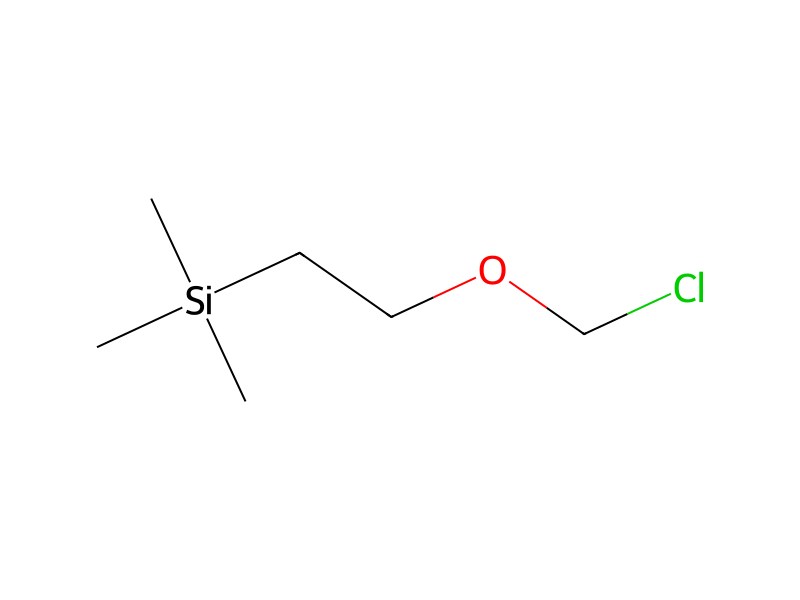
[Br:1][C:2]1[C:3]([O:11][CH3:12])=[C:4]2[C:8](=[CH:9][CH:10]=1)[NH:7][N:6]=[CH:5]2.[H-].[Na+].Cl[CH2:16][O:17][CH2:18][CH2:19][Si:20]([CH3:23])([CH3:22])[CH3:21]>C1COCC1>[Br:1][C:2]1[C:3]([O:11][CH3:12])=[C:4]2[C:8](=[CH:9][CH:10]=1)[N:7]([CH2:16][O:17][CH2:18][CH2:19][Si:20]([CH3:23])([CH3:22])[CH3:21])[N:6]=[CH:5]2Participants




Procedure
To a stirred solution of 5-bromo-4-methoxy-1H-indazole (1.33 g, 5.9 mmol) in THF (20 mL) at 0° C., under a nitrogen atmosphere, was added sodium hydride (280 mg, 7 mmol) portionwise. After 5 min, (2-chloromethoxy-ethyl)-trimethylsilane (1.36 mL, 7.7 mmol) was added dropwise. After 3 hours, the reaction mixture was quenched with water (20 mL). The resulting biphasic mixture was separated, extracted with ethyl acetate (2×50 mL) and the combined organic layers were washed with brine (30 mL), dried (Na2SO4), filtered and concentrated in vacuo. The resulting residue was subjected to flash chromatography (SiO2, gradient 10-20% ethyl acetate in cyclohexane) to give the title compound as a yellow oil (1.19 g, 56%). LCMS (Method B): RT=4.91 min, [M+H]+=357.
Workup
- waitAfter 3 hours
- customthe reaction mixture was quenched with water (20 mL)
- customThe resulting biphasic mixture was separated
- extractionextracted with ethyl acetate (2×50 mL)
- washthe combined organic layers were washed with brine (30 mL)
- dry with materialdried (Na2SO4)
- filtrationfiltered
- concentrationconcentrated in vacuo
Sources & evidence
- ORD record
- ord-d8a859c8d2bc49ec900407f37b004ee9
- Source dataset
- uspto-grants-2013_10
- Patent number
- US08546376B2
Reaction notes
Loading…