StartseiteMCPSkillsWorkbenchOpenChem
StartseiteWorkbenchBenachrichtigungenMein Bereich
llms.txt · skill.md · MCP-AnleitungDatenschutz · Nutzungsbedingungen · Supportv1.8.4
  1. Startseite
  2. /Verbindung

Natriumhydrid

Sodium hydride

HCID 24758
Neue Reaktion
Drucken
GrundinformationenÜberblickNamen und BezeichnerEigenschaftenSicherheit und RegulatorischesChemie und IndustrieZugehörige ReaktionenNotizen zur Verbindung
TeilstruktursucheÄhnliche Strukturen suchen

Grundinformationen

CAS
7646-69-7
Standard-SMILES
[H-].[Na+]
InChIKey
BZKBCQXYZZXSCO-UHFFFAOYSA-N
Summenformel
HNa
Durchschnittliche Molmasse
23,9977 g/mol
Monoisotopische Masse
23,99759431

Überblick

See also: Sodium hydride (NaD) (annotation moved to); Sodium hydride (annotation moved to).

Namen und Bezeichner

Bevorzugter Name
Sodium hydride
IUPAC
sodium hydride
Lokaler Name
Natriumhydrid
Englischer Name
Sodium hydride
Summenformel
HNa
Molmasse
24

Namen und Synonyme

SODIUM HYDRIDE7646-69-7Sodiumhydride15780-28-6hydridosodium23J3BHR95O60% Sodium hydrideSodium hydride (NaH)Sodium monohydridesodium;hydridesodiumhydridnatrium hydride
Weitere Namen anzeigen
NAHSodium Hydride, 60% oilQHNSodium hydride suspensionSodium Hydride 60% in mineral oil340Fnah80NAH 800.84-0.86
sodium hydridSodium hydride-SCHEMBL65SCHEMBL208DTXSID90893680AKOS015833248AKOS015902809S0481

Datenbank-Bezeichner

CAS
7646-69-7
PubChem CID
24758
DTXSID
DTXSID90893680

Eigenschaften

Berechnete Struktureigenschaften

Polarare Oberfläche (TPSA)
0 Ų
H-Brücken-Donoren
0
H-Brücken-Akzeptoren
1
Frei drehbare Bindungen
0
Schwere Atome
1
Formalladung
0
Komplexität
0

Physikochemische Eigenschaften

Schmelzpunkt
800 °C · 800 °C (dec.) (lit.)
Dichte
1.2 · 1.2
Flammpunkt
185 °C · 185°C
storage temp.
30 °C · Store below +30°C.
Löslichkeit
Soluble in molten sodium. Insoluble in ammonia, benzene,carbon tetrachloride, carbon disulfide and all organic solvents.
Aggregatzustand
powder (moistened with oil)
Farbe
White to pale gray
Geruch (Odor)
Odorless
Wasserlöslichkeit
REACTS
Spezifische Wärmekapazität
1.52 J/ · Cp(crystal): 1.52 J/(g·K), at 25℃
Merck
14 · 14,8625
InChI
InChI=1S/Na.H
InChIKey
MPMYQQHEHYDOCL-UHFFFAOYSA-N
SMILES
[NaH]
CAS Datenbank
7646 · 7646-69-7(CAS DataBase Reference)

Sicherheit und Regulatorisches

Sicherheitsangaben dienen nur zur Orientierung und ersetzen weder das Sicherheitsdatenblatt (SDB) des Lieferanten noch geltende Vorschriften oder eine fachliche Bewertung.

Gefahrenhinweise

CSL Reaction Information · 6 Einträge

CSL00007

N,N-DIMETHYLFORMAMIDE + SODIUM HYDRIDE

Thermal runaway reaction already at temperatures > 40°C

Deprotonation

C&EN

6/29/18

Sicherheitsdaten

F
10-21
wgk
3
tsca
TSCA listed
ridadr
UN 1427
hs_code
2850009090
RTECS-Nr.
WB3910000
risk_code
15-36-35-11
hazard_code
F,C
safety_code
26-43-7/8-43A-24/25-7-60-22-45-37/39-16
hazard_class
4.3
packing_group
I
Speicherklasse
4.3 - Hazardous materials which set free flammable gases upon contact with water
Giftige Stoffe Daten
7646-69-7(Hazardous Substances Data)
Hazard Classifications
Eye Dam. 1Flam. Sol. 1Met. Corr. 1Skin Corr. 1AWater-react 1

Chemie und Industrie

Anwendungen · 2 Einträge

BeschreibungSodium hydride, is a binary salt that has a specific hazard of releasing hydrogen upon contact with water. It is an odorless powder that is violently water reactive. The four-digit UN identification number is 1427. The NFPA 704 designation is health 3, flammability 3, and reactivity 2. The white space at the bottom of the diamond has a W with a slash through it, indicating water reactivity.

VerwendenSodium hydride is used to enhance the condensation reactions of carbonyl compounds through the Dieckmann condensation, Stobbe condensation, Darzens condensation and Claisen condensation. It acts as a reducing agent used to prepare diborane from boron trifluoride. It is also used in fuel cell vehicles. Further, it is used to dry some organic solvents. In addition to this, it is involved in the preparation of sulfur ylides, which is utilized for the conversion of ketones into epoxides.

Vor- und nachgelagerte Produkte

Vorgelagerte Rohstoffe

NatriumBorsureWasserstoffMethanol

Nachgelagerte Produkte

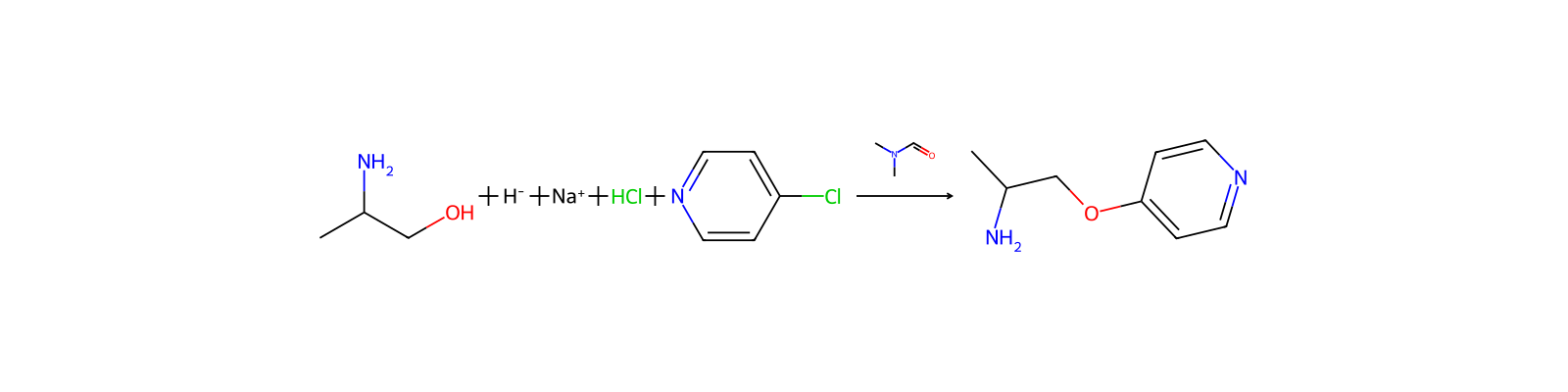
Methyl 3-amino-4-methylthiophene-2-carboxylateEthyl 3-aminobenzofuran-2-carboxylate4-(Trimethyl-ureido)-benzenesulfonyl chloride3-(3,5-Dimethyl-pyrazol-1-yl)-propylamine(6-(1H-Pyrazol-1-yl)pyridin-3-yl)methanol

Zugehörige Reaktionen

60.130
Reaktionsaufzeichnung erstellen
HRID 360als Reagenz
HRID 800als Edukt
HRID 801als Edukt
HRID 802als Edukt
HRID 803als Edukt
HRID 926als Edukt
HRID 927als Edukt
HRID 1002als Edukt
ZurückSeite 1 von 7517

Notizen zur Verbindung

Auf dieser SeiteGrundinformationenÜberblickNamen und BezeichnerEigenschaftenSicherheit und RegulatorischesChemie und IndustrieZugehörige ReaktionenNotizen zur Verbindung
NIST chemische Informationen
Sodium hydride(7646-69-7)
EPA chemische Informationen
Sodium hydride (NaH) (7646-69-7)
5-Bromo-2-ethoxy-pyrimidine
4-Azaoctamethylendiamin
Methyl nicotinoylacetate
5-Fluoro-2-oxindole
3-Amino-2,2-dimethylpropan-1-ol
4-Hydroxy-2-methylpyrimidine
4-Bromo-pyran-2-one
Cyclooctanon
1-Benzyl-2-methyl-1H-imidazol
TEMAFLOXACIN
3,5-Difluorophenylacetic acid
Furo[2,3-b]pyridine-2-carboxylic acid, 3-amino-, ethyl ester (9CI)
2-(Tetrahydro-pyran-4-yl)-ethanol
(Z)-Tetradec-9-enol
1-Boc-4-hydroxy-4-(hydroxymethyl)-piperidine
N-(4,6-Dimethylpyrimidin-2-yl)-N-methylbenzene-1,4-diamine
1-Benzyl-2-imidazolecarboxylic acid
Ethyl 4-methoxy-3-oxo-butanoate
Sarafloxacin
Methyl 6-(1H-pyrazol-1-yl)pyridine-3-carboxylate
6-(1H-Pyrazol-1-yl)nicotinonitrile
Sertaconazole
7-Methyl-1,6-octadiene
Ofloxacin
6-(1H-Pyrazol-1-yl)nicotinic acid
N-Methyl-6-(1H-pyrazol-1-yl)nicotinamide
2 , 4-Bis(benzyloxy)-5-bromopyrimidine
[3R-(3α,3aβ,6β,7β,8aα)]-Octahydro-6-methoxy-3,6,8,8-tetramethyl-1H-3a,7-methanoazulen
3,5-Dimethyl-3H-imidazole-4-carboxylic acid ethyl ester
5-Fluoro-2-methylbenzothiazole
Flosequinan
(R)-(-)-Benzyl glycidyl ether
2,4,6-Tris(2-pyridyl)-s-triazin
2,2-Dimethylcyclohexanone
CROCONAZOLE
Ergänzende Hinweise · 1 Eintrag

Definitionsodium hydride: A white crystallinesolid, NaH; cubic; r.d. 0.92; decomposesabove 300°C (slow);completely decomposed at 800°C.Sodium hydride is prepared by thereaction of pure dry hydrogen withsodium at 350°C. Electrolysis ofsodium hydride in molten LiCl/KClleads to the evolution of hydrogen;this is taken as evidence for the ionicnature of NaH and the presence ofthe hydride ion (H–). It reacts violentlywith water to give sodium hydroxideand hydrogen, with halogensto give the halide and appropriatehydrogen halide, and ignites spontaneouslywith oxygen at 230°C. It is apowerful reducing agent with severallaboratory applications.