1,3-Propanediol → 1,3-Propanediol
Reaction equation

[CH2:1]([OH:5])[CH2:2][CH2:3][OH:4].[CH2:6]([CH:9]1[O:14][CH2:13][CH2:12][CH2:11][O:10]1)[CH2:7][CH3:8]>[Pd]>[CH2:6]([CH:9]1[O:14][CH2:13][CH2:12][CH2:11][O:10]1)[CH2:7][CH3:8].[CH2:9]([O:4][CH2:3][CH2:2][CH2:1][O:5][CH2:9][CH2:6][CH2:7][CH3:8])[CH2:6][CH2:7][CH3:8].[CH2:1]([OH:5])[CH2:2][CH2:3][OH:4]Participants
6
Reactant 2
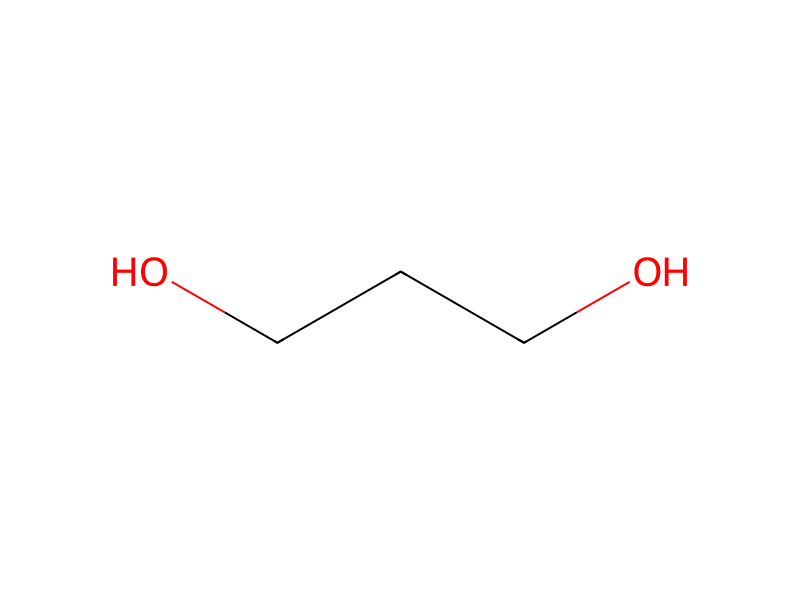

Product 3

Reagents, catalysts & solvents 1

Conditions
- Temperature
- 200 °C
Procedure
1000 g of 1,3-propanediol and 500 g of 2-propyl-1,3-dioxane were combined in a 2 L stainless steel autoclave with 6.0 g of 5% Pd on carbon catalyst. The reactor was sealed and purged twice with N2 and once with H2. The reactor was charged with H2 and heated to 200° C. The reactor was brought to an operating pressure of 6.89 MPa and stirring commenced at 750 rpm. Temperature and pressure were maintained for 2 h. The reactor was cooled, vented, and the contents filtered. The filtrate was analyzed by GC to yield 153 g of 2-propyl-1,3-dioxane, 288 g of 3-BP, 15.9 g of 1,3-dibutoxypropane, and 1017 g of 1,3-propanediol. This corresponds to yield 69% conversion of the acetal and 95% selectivity to the desired ether alcohol, 3-BP.
Workup
- customThe reactor was sealed
- custompurged twice with N2 and once with H2
- additionThe reactor was charged with H2
- temperatureTemperature and pressure were maintained for 2 h
- temperatureThe reactor was cooled
- filtrationthe contents filtered
Sources & evidence
- ORD record
- ord-df459c7bad0e4925a61e615aa30717ba
- Source dataset
- uspto-grants-2016_07
- Patent number
- US09388105B2
Reaction notes
Loading…