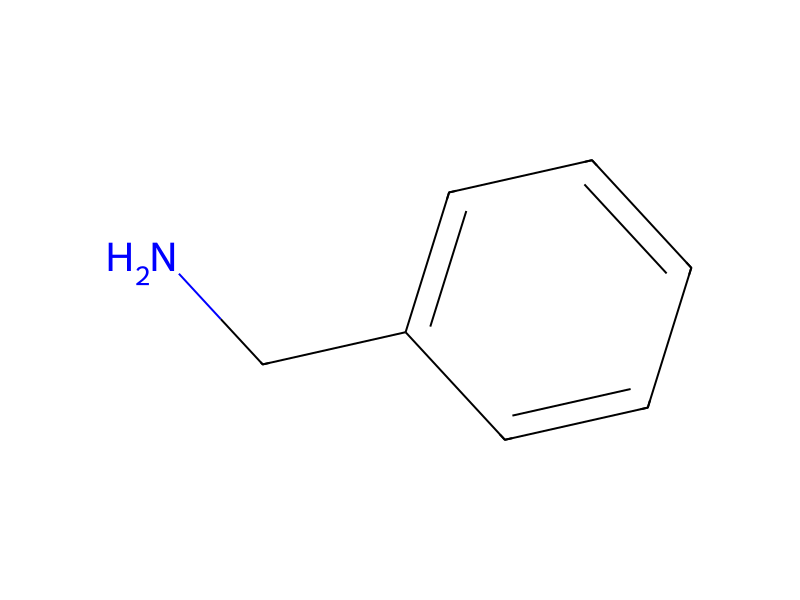
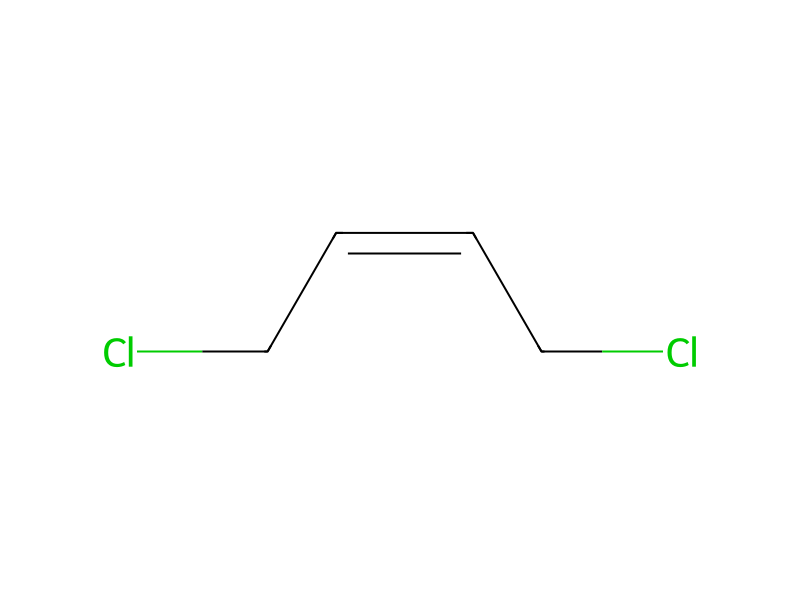
Benzylamine → 1-Benzyl-2,5-dihydropyrrole
Reaction equation

Cl[CH2:2]/[CH:3]=[CH:4]\[CH2:5]Cl.[CH2:7]([NH2:14])[C:8]1[CH:13]=[CH:12][CH:11]=[CH:10][CH:9]=1>>[CH2:7]([N:14]1[CH2:5][CH:4]=[CH:3][CH2:2]1)[C:8]1[CH:13]=[CH:12][CH:11]=[CH:10][CH:9]=1Participants

Procedure
A mixture of 1,4-dichloro-cis-2-butene and benzylamine is heated at reflux to give 1-benzyl-3-pyrroline (2), which is converted to the epoxide (3) by first reacting (2) with chlorine in dilute hydrochloric acid and then with sodium hydroxide. The epoxide is opened to give the corresponding hydroxy amine (4) with either ammonia and water or sodium azide followed by reduction of the resulting azide. The resulting trans 1-benzyl-3-amino-4-hydroxypyrrolidine (4) is acetylated with acetic anhydride to give N-acetyl derivative (5) in which N-benzyl group is removed by hydrogenation in the presence of Pd/C under acidic conditions to give (6), and further alkylated with bromoethyl acetate to give N-ethoxycarbonyl methyl derivative (7). The basic hydrolysis of the ester (7) gives the target (8).
Workup
- temperatureis heated
- temperatureat reflux
Sources & evidence
- ORD record
- ord-578b7e7393434c3396ebb1aff4248f11
- Source dataset
- uspto-grants-2003_02
- Patent number
- US06518299B1
Reaction notes
Loading…