Epichlorohydrin → Diglycidyl ether
Reaction equation

[CH2:1]([CH:3]1[O:5][CH2:4]1)Cl.[OH-:6].[K+].S([O-])([O-])(=O)=O.[Na+].[Na+]>>[CH2:1]([O:6][CH2:1][CH:3]1[O:5][CH2:4]1)[CH:3]1[O:5][CH2:4]1Participants


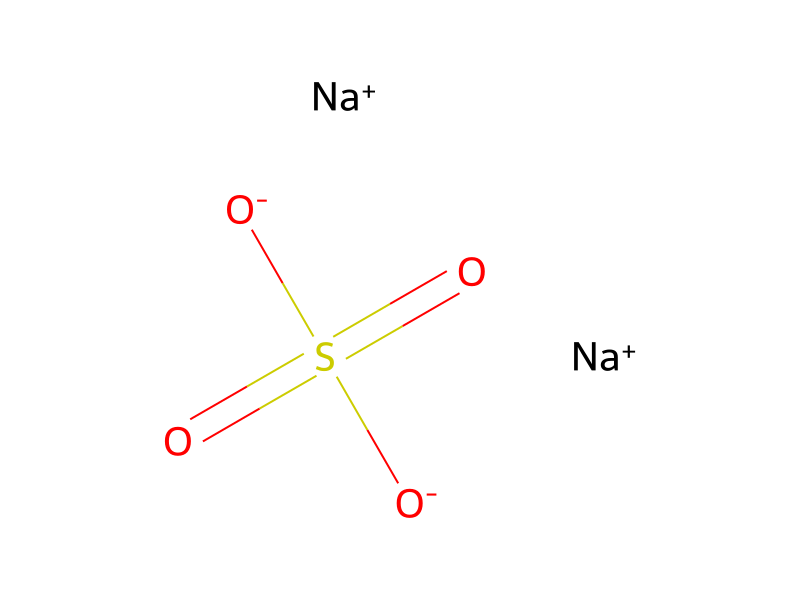

Conditions
- Temperature
- 37.5 °C
Procedure
A 6.8 g (14 mmol) quantity of 1,3-bis(4,4′-dimethyl-diphenylamino)-4-hydroxybenzene and 32 ml (0.4 mol) of epichlorohydrin (commercially obtained from Aldrich, Milwaukee, Wis.) were added to a 50 ml 3-neck round bottom flask equipped with reflux condenser, thermometer and mechanical stirrer to form a reaction mixture. The reaction mixture was stirred vigorously at 35-40° C. for 7 hours. While the reaction mixture was stirring, 2.7 g (0.04 mol) of powdered 85% potassium hydroxide and 0.7 g (5 mmol) of anhydrous sodium sulfate were added in two portions, with a temporary cooling of the reaction mixture to 20-25° C. prior to each addition. After termination of the reaction, the mixture was cooled to room temperature and filtered. The organic part of the mixture was treated with diethylether and washed with distilled water until the wash water had a neutral pH. After the organic solution was dried over anhydrous magnesium sulfate, treated with activated charcoal, and filtered, the solvent was removed. The residue was purified by column chromatography (silica gel, grade 62, 60-200 mesh, 150 Å, Aldrich) using a mixture of acetone:hexane in a volume ratio of 1:4 as the eluant. Fractions containing the product were collected and the solvent was evaporated to afford 4.8 g (63%) of glycidyl ether of 1,3-bis(4,4′-dirnethyldiphenylamino)phenol (Compound 2). A 1H NMR spectrum (250 MHz, CDCl3) yielded chemical shifts, in ppm, of: 7.05-6.70 (m, 19H, Ar); 3.84 (d, J=4.0 Hz, OCH2); 2.84 (m, 1H, CH); 2.33 (dd, 1H, one of CH2 of oxirane); and 2.27 (s, 12H, CH3). An elemental analysis resulted in the following values in weight %: C 82.08; H 6.61; N 5.07, which compared with calculated values for C37H36N2O2 in weight percent of: C82.19; H 6.71; N 5.18.
Workup
- addition) were added to a 50 ml 3-neck round bottom flask
- customequipped
- temperaturewith reflux condenser
- customthermometer and mechanical stirrer to form a reaction mixture
- stirringWhile the reaction mixture was stirring
- temperaturewith a temporary cooling of the reaction mixture to 20-25° C.
- additionto each addition
- customAfter termination of the reaction
- temperaturethe mixture was cooled to room temperature
- filtrationfiltered
- additionThe organic part of the mixture was treated with diethylether
- washwashed with distilled water until the wash water
- dry with materialAfter the organic solution was dried over anhydrous magnesium sulfate
- additiontreated with activated charcoal
- filtrationfiltered
- customthe solvent was removed
- customThe residue was purified by column chromatography (silica gel, grade 62, 60-200 mesh, 150 Å, Aldrich)
- additiona mixture of acetone
- additionFractions containing the product
- customwere collected
- customthe solvent was evaporated
Sources & evidence
- ORD record
- ord-d40ca9a9baac4e138923b845556ef5b1
- Source dataset
- uspto-grants-2005_11
- Patent number
- US06960418B2
Reaction notes
Loading…