Nitric Acid → HCID 22277195, compound
Reaction equation

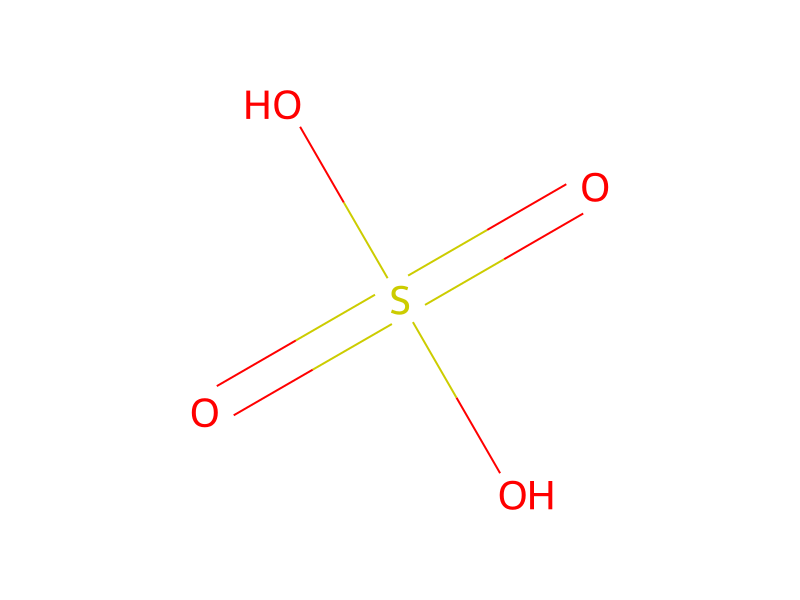
OS(O)(=O)=O.[Br:6][C:7]1[CH:15]=[CH:14][C:10]([C:11]([OH:13])=[O:12])=[CH:9][C:8]=1[C:16]([OH:18])=[O:17].[N+:19]([O-])([OH:21])=[O:20]>>[Br:6][C:7]1[CH:15]=[CH:14][C:10]([C:11]([OH:13])=[O:12])=[C:9]([N+:19]([O-:21])=[O:20])[C:8]=1[C:16]([OH:18])=[O:17]Participants



Procedure
To a 3-L 4-neck round-bottomed flask equipped with a mechanical stirrer, thermometer, 250-mL addition funnel and charged with concentrated H2SO4 (577 mL), was added 4-bromoisophthalic acid (75.0 g, 306 mmol). The white suspension was cooled to ice-bath temperature and a nitrating reagent (pre-prepared by the careful addition of H2SO4 (169 mL) to HNO3 (107 mL)) was slowly added while maintaining an internal reaction temperature of less than 15° C. When addition was complete, the ice-bath was removed and the suspension stirred overnight at room temperature. After approximately 14 hours, the flask was placed in an ice-bath and crushed ice was added to quench the excess nitrating reagent while maintaining an internal temperature less than 40° C. The cream-colored suspension was filtered, and the solids were collected by filtration and washed with a small volume of ice-cold water. The solids were dissolved in methanol and the volatile components were evaporated. The resulting solids were dried at 60° C. in a vacuum oven overnight to afford Intermediate 39(a) (79.6 g) in 87% yield.
Workup
- customTo a 3-L 4-neck round-bottomed flask equipped with a mechanical stirrer
- additionthermometer, 250-mL addition funnel
- temperatureThe white suspension was cooled to ice-bath temperature
- additionwas slowly added
- temperaturewhile maintaining an internal reaction temperature of less than 15° C
- additionWhen addition
- customthe ice-bath was removed
- waitAfter approximately 14 hours
- customthe flask was placed in an ice-bath
- customcrushed ice
- additionwas added
- customto quench the excess nitrating reagent
- temperaturewhile maintaining an internal temperature less than 40° C
- filtrationThe cream-colored suspension was filtered
- filtrationthe solids were collected by filtration
- washwashed with a small volume of ice-cold water
- dissolutionThe solids were dissolved in methanol
- customthe volatile components were evaporated
- customThe resulting solids were dried at 60° C. in a vacuum oven overnight
Sources & evidence
- ORD record
- ord-1661537c9dc84ede89b640a54587d3d1
- Source dataset
- uspto-grants-2005_11
- Patent number
- US06967198B2
Reaction notes
Loading…