2,3-Dihydrofuran → HCID 12509180, compound
Reaction equation

[O:1]=[C:2]1[NH:7][C:6](=[O:8])[C:5]([C:9]([O:11][CH3:12])=[O:10])=[CH:4][NH:3]1.[O:13]1[CH:17]=[CH:16][CH2:15][CH2:14]1>N1C=CC=CC=1>[O:13]1[CH2:14][CH2:15][CH2:16][CH:17]1[N:3]1[CH:4]=[C:5]([C:9]([O:11][CH3:12])=[O:10])[C:6](=[O:8])[N:7]([CH:14]2[CH2:15][CH2:16][CH2:17][O:13]2)[C:2]1=[O:1]Participants
4
Reactant 2
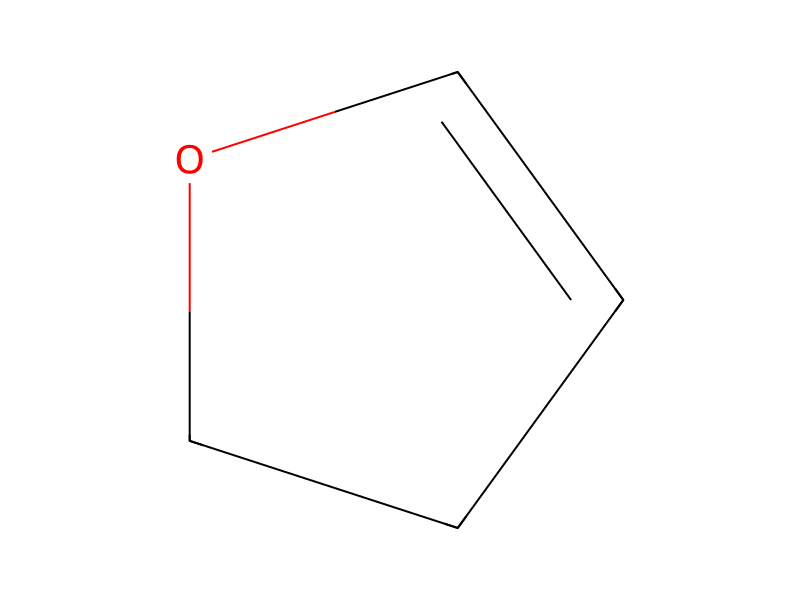

Product 1

Reagents, catalysts & solvents 1

Procedure
In 14 ml. of pyridine are dissolved 3.4 g. (20.0 mmoles) of methyl 1,2,3,4-tetrahydro-2,4-dioxopyrimidine-5-carboxylate and 4.9 g. (70.0 mmoles) of 2,3-dihydrofuran and the solution is heated in a closed reaction vessel at 140° C. for 6 hours. The reaction mixture is then concentrated to dryness under reduced pressure and the residue is dissolved in 30 ml. of chloroform and applied to a column of 68 g. of silica gel. Elution is carried out with 250 ml. of chloroform and the eluate is concentrated to dryness under reduced pressure to give 0.8 g. (yield 12.9%) of methyl 1,3-bis(2-tetrahydrofuryl)-1,2,3,4-tetrahydro-2,4-dioxopyrimidine-5-carboxylate.
Workup
- concentrationThe reaction mixture is then concentrated to dryness under reduced pressure
- dissolutionthe residue is dissolved in 30 ml
- washElution
- concentrationof chloroform and the eluate is concentrated to dryness under reduced pressure
- customto give 0.8 g
Sources & evidence
- ORD record
- ord-3dbfefe6a35c4940ab3ee9df3f26c682
- Source dataset
- uspto-grants-1982_05
- Patent number
- US04329460
Reaction notes
Loading…